Paul’s Perspective:
This matters because visual production is becoming a business process issue, not just a creative one. Companies that adapt quickly can reduce cycle time and cost across marketing, product, and operations, while those without clear briefing and verification discipline will face more mistakes, inconsistency, and trust risk.
Key Points in Video:
- A reported 93% win rate and a 26-point benchmark gap suggest a material leap in capability, not just an incremental model improvement.
- Thinking mode, web search, and self-verification together can compress work that previously required multiple roles or handoffs.
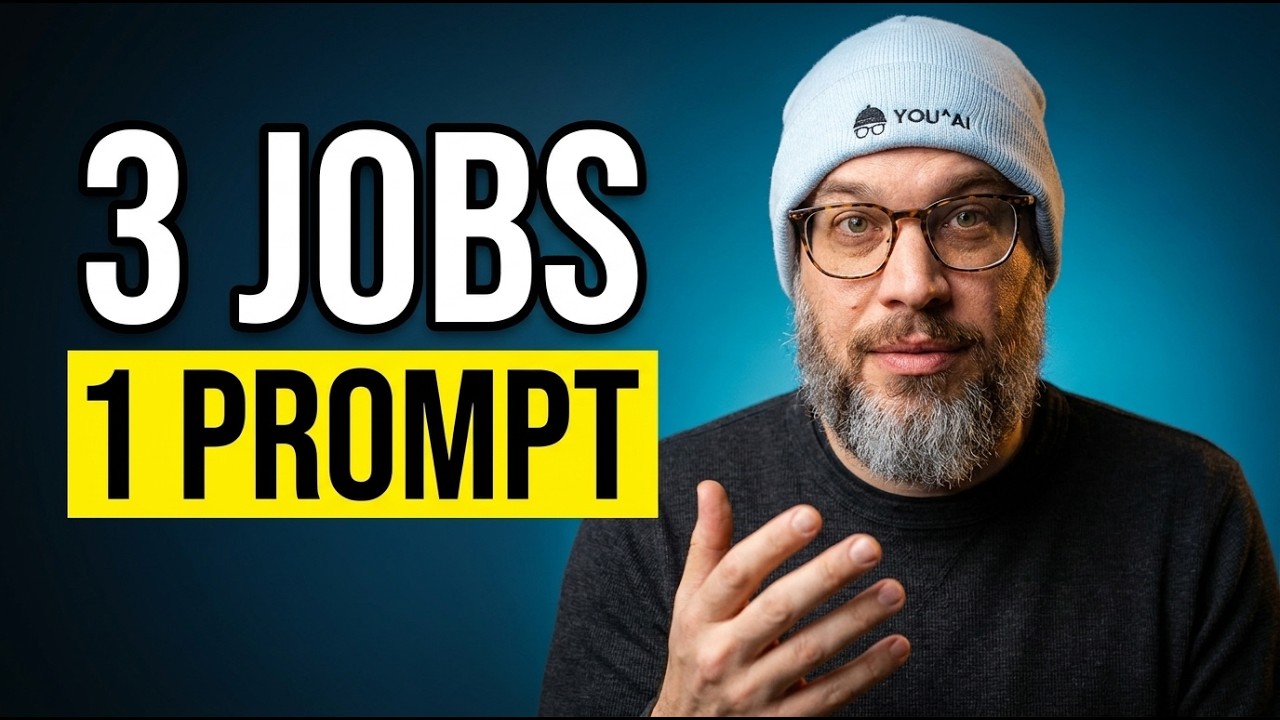
- One prompt can produce multiple coherent frames, making campaign concepts, product mockups, and localized creative faster to generate.
- The biggest emerging constraint is specification quality, meaning teams that can write precise briefs and systematize inputs gain the advantage.
- Forgery risk rises as image outputs become more convincing, increasing the need for stronger review, evidence, and authentication workflows.
Strategic Actions:
- Measure the capability shift by looking beyond rankings to benchmark gaps and practical workflow impact.
- Use reasoning features such as thinking mode, web search, and self-checking to turn one prompt into a multi-step production workflow.
- Apply the model to newly viable use cases like localized launch assets, UI specifications, and live-data-driven creative.
- Compare tool fit by use case, especially where image generation and design-oriented systems diverge.
- Reassess team roles as some research, concepting, and execution tasks collapse into a single operator workflow.
- Improve brief quality since the new performance ceiling depends increasingly on specification clarity.
- Strengthen verification processes to address forgery, evidence, and trust concerns in visual content.
The Bottom Line:
- AI image generation is shifting from a standalone creative tool into a reasoning-driven workflow that can combine ideation, research, and visual execution in a single prompt.
- That changes how teams produce design, marketing, and product assets while raising new risks around verification, trust, and the quality of the brief itself.
Dive deeper > Source Video:
Ready to Explore More?
If you want to turn tools like this into practical workflows, we can help our teams map the right use cases, prompts, and guardrails for your business. We work together to make adoption useful, efficient, and manageable.