
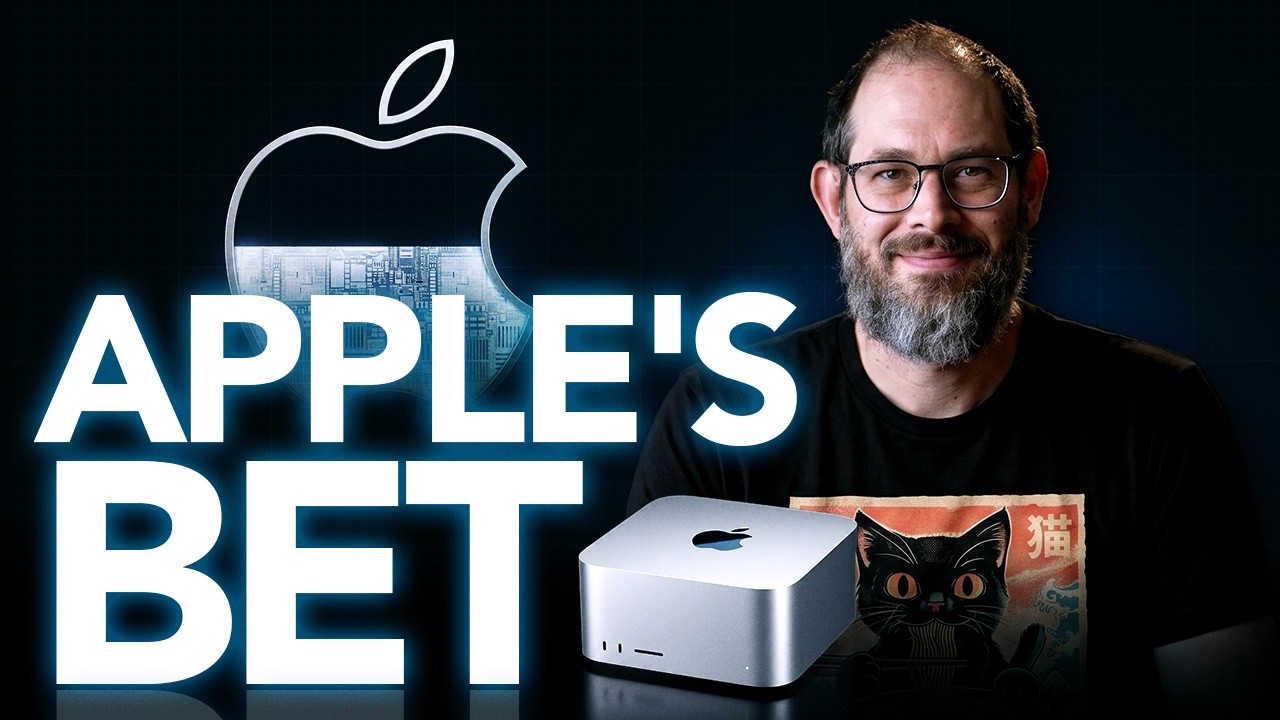
Paul’s Perspective:
This matters because AI infrastructure is quickly becoming a capital allocation decision, not just a tech preference. Leaders who understand where local ownership delivers privacy, speed, and cost control—and where cloud systems still win—will make better bets on tools, teams, and operating models before they overspend or lock into the wrong platform.
Key Points in Video:
- The product ladder runs from Mac mini to Mac Studio, with memory capacity framed as the practical constraint that determines local AI usefulness more than branding alone.
- Apple’s newest chip appearing at the lower end of the lineup suggests a deliberate segmentation strategy rather than a simple top-down performance upgrade.
- The analysis highlights two opposing trends: local AI is becoming viable for a profitable minority of power users, while frontier-grade agents are increasingly shifting to always-on cloud infrastructure.
- A key unresolved issue is workflow setup, since buying capable hardware does not automatically solve orchestration, persistence, or multi-agent management.
- The strategic risk is that even a powerful desktop can become just a terminal if the most valuable intelligence and automation ultimately live in rented cloud environments.
Strategic Actions:
- Assess whether your AI needs are better served by owned local compute or rented cloud capacity.
- Use memory requirements, not just chip names, to estimate how many local models or agents a machine can realistically support.
- Compare the Mac mini and Mac Studio tiers based on workload intensity, persistence needs, and budget.
- Account for setup and orchestration challenges before assuming local hardware will deliver a complete AI workflow.
- Separate the desktop hardware decision from the broader cloud strategy for advanced or always-on agents.
- Watch the emerging “missing middle” where businesses may want more than a chatbot subscription but less than full frontier infrastructure.
The Bottom Line:
- Apple has repositioned the Mac desktop lineup around owning AI compute locally, with chip and memory tiers that signal exactly how many models and agents different buyers can realistically run.
- For business leaders, the bigger issue is not just hardware cost but deciding which AI workloads belong on owned machines versus persistent cloud systems that may become the long-term home for more advanced agents.
Dive deeper > Source Video:
Ready to Explore More?
If you’re weighing where AI should live in your business, we help teams sort out the practical mix of local tools, cloud systems, and workflow design. We can work with you to make the investment fit how your people actually operate.