Paul’s Perspective:
This matters because many companies are spending too much time reacting to AI headlines and not enough time redesigning work. The practical opportunity is to identify where AI can remove friction, raise output, and help existing teams perform at a higher level without waiting for a total business overhaul.
Key Points in Video:
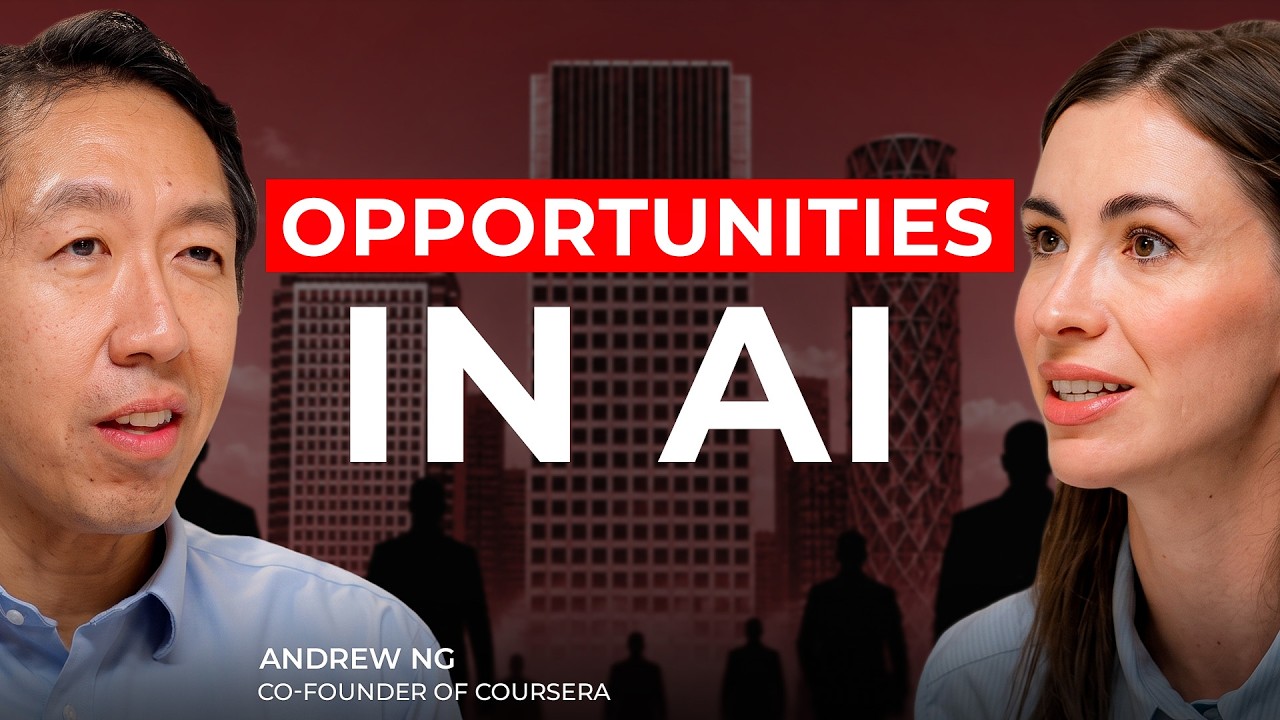
- Andrew Ng challenges claims that AI will wipe out jobs by reframing automation math: even if 30–40% of tasks can be automated, most roles still retain a majority of human work.
- He argues traditional education is already about two years behind the market, making self-directed, practical AI skill building more valuable for new grads and mid-career professionals.
- His hiring bar for 2026–27 spans marketers, recruiters, and operations staff who can build with AI, signaling that lightweight technical fluency is becoming a cross-functional requirement.
- He also warns that current AI models are weak learning tools in some contexts, which matters for companies relying on AI for training, onboarding, and knowledge transfer.
- The discussion ties near-term opportunity to implementation, with examples ranging from secure data use to autonomous agents and practical business applications rather than distant AGI speculation.
Strategic Actions:
- Question broad AI fear narratives and separate hype from likely business impact.
- Break jobs into tasks to identify the 30–40% that can be automated first.
- Redesign roles around the higher-value 60–70% that still benefits from human judgment.
- Prioritize hiring and development for people who can build with AI, not just prompt it.
- Encourage practical, self-directed AI learning instead of relying only on formal education paths.
- Be cautious about using AI as a primary teaching tool where accuracy and depth matter.
- Explore applied AI opportunities in functions like marketing, recruiting, operations, and product delivery.
- Evaluate governance, privacy, and control issues before scaling AI into sensitive workflows.
The Bottom Line:
- The real AI upside is not broad job replacement but learning to build tools that automate pieces of work while expanding what people can do with the remaining 60–70% of their roles.
- For business leaders, the edge will come from teams that can apply AI hands-on across marketing, recruiting, operations, and product development rather than simply using off-the-shelf tools.
Dive deeper > Source Video:
Ready to Explore More?
If you are sorting out where AI can actually improve operations, marketing, or team productivity, we can help you assess the opportunities and build a practical plan. Our team works with companies to turn AI from a talking point into useful business capability.