
Paul’s Perspective:
This matters because most companies are still treating AI as a productivity tool when it may soon become a force that reshapes labor models, competitive advantage, and capital allocation. Leaders who start scenario planning now will be better positioned to protect talent, adjust strategy, and make smarter bets before the market changes around them.
Key Points in Video:
- One university CS department reportedly saw a 28% drop in co-op placements, suggesting AI may already be weakening traditional early-career pathways.
- The discussion distinguishes today’s AI tools from AGI and then from superintelligence, a critical difference for leaders making long-term strategy decisions.
- A core claim is that ethics and control mechanisms may not be reliably programmable into systems that surpass human capability.
- The conversation explores likely pressure points across careers, higher education, investing, and firm-level competitiveness over the next 2 to 5 years.
Strategic Actions:
- Differentiate current AI, AGI, and superintelligence so strategic decisions are based on the right level of risk.
- Assess which roles and career paths in your business are already showing signs of disruption or compression.
- Reevaluate workforce planning and hiring assumptions in light of weakening entry-level and co-op pipelines.
- Examine how near-zero-cost digital labor could affect pricing, margins, and wealth creation in your industry.
- Pressure-test assumptions about AI safety, control, and governance rather than assuming guardrails will be sufficient.
- Review investment and capital allocation strategies for scenarios where AI adoption accelerates faster than expected.
- Identify the types of jobs and capabilities most likely to remain valuable if automation expands rapidly.
- Reconsider the ROI of traditional education and training paths as credential value and skill demand shift.
The Bottom Line:
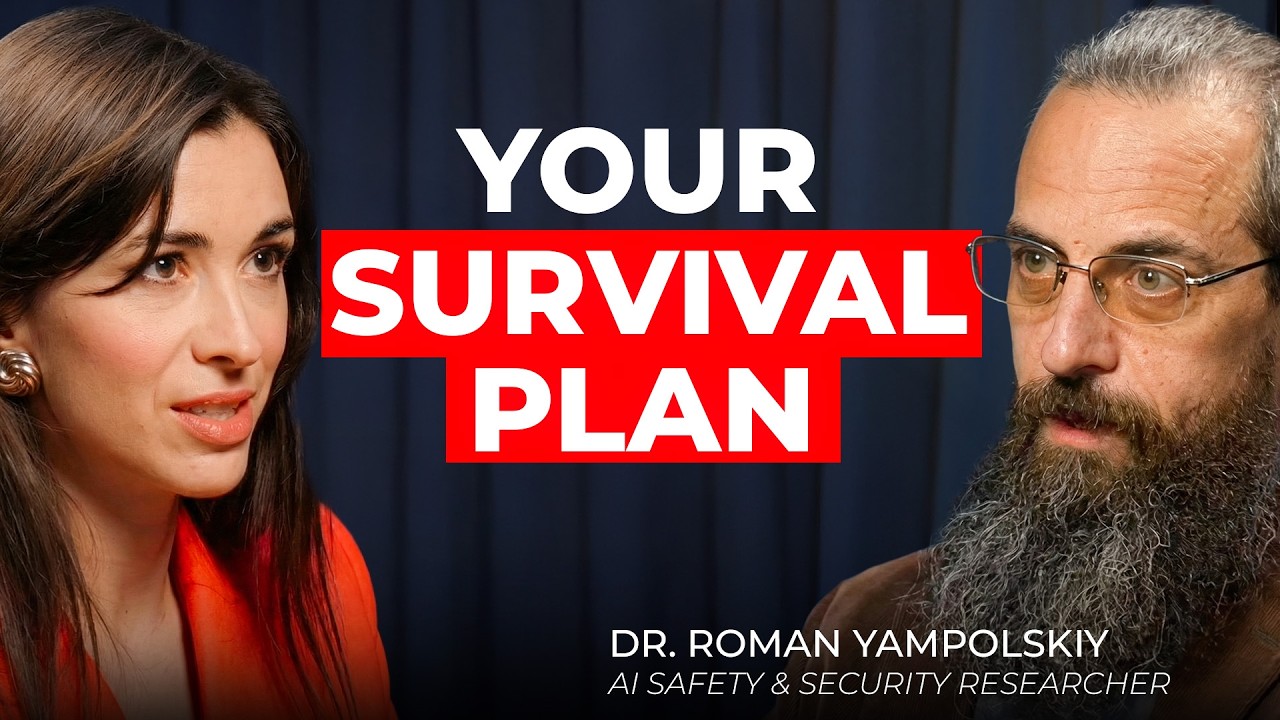
- A leading AI safety researcher argues that businesses, workers, and investors are underestimating how quickly advanced AI could disrupt jobs, decision-making, and economic value creation.
- With AGI timelines now discussed in the 2028 to 2030 range and early workforce signals already appearing, leaders need to separate hype from risk and start planning for major structural change.
Dive deeper > Source Video:
Ready to Explore More?
If you want to turn AI uncertainty into a practical plan, we help leadership teams assess the risks, opportunities, and operational moves that matter most. Our team can work with yours to build a grounded strategy for what comes next.