Paul’s Perspective:
This matters because voice AI often stalls in production when teams have to stitch together separate speech, language, and voice components that are slow to tune and expensive to maintain. A more unified model approach can shorten development time, reduce integration risk, and make practical voice automation more accessible for mid-market businesses.
Key Points in Video:
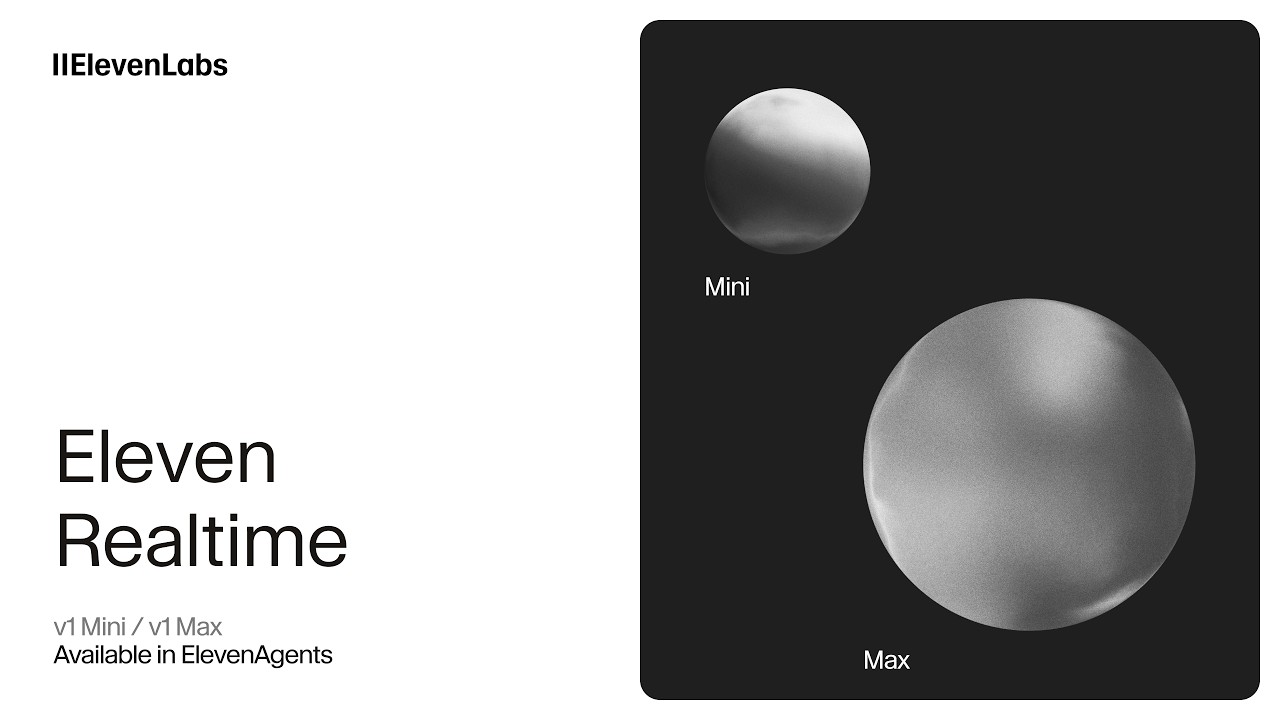
- Two versions are available: v1 Mini for lower-cost conversational use cases and v1 Max for more complex tasks with tool calling.
- v1 Max reportedly scored 98.8% on Big Bench Audio in independent testing by Artificial Analysis.
- The model begins speaking in about 0.57 to 0.6 seconds on average, helping conversations feel more natural.
- OpenAI Realtime API compatibility means teams can switch by updating the endpoint and model name rather than rebuilding their integration.
Strategic Actions:
- Choose the model that fits the use case: v1 Mini for cost-efficient conversational agents or v1 Max for complex workflows and tool use.
- Deploy the model through ElevenAgents for faster setup or use the Realtime API for custom implementations.
- If you already use OpenAI’s Realtime API, update the endpoint and model name to migrate with minimal code changes.
- Use the low-latency response capability to support natural conversations in customer service, lead qualification, tutoring, or interactive experiences.
- Evaluate performance needs around speed, accuracy, and workflow complexity before rolling out to customers or internal teams.
The Bottom Line:
- Eleven Realtime packages speech recognition, turn-taking, language processing, and voice into one speech-to-speech model, reducing the work needed to build natural voice agents.
- With response times around 0.6 seconds and a top reported balance of speed and accuracy, it lowers the barrier to deploying voice assistants for support, sales, and multi-step workflows.
Dive deeper > Source Video:
Ready to Explore More?
If you are exploring where voice agents fit in your business, we can help our teams assess the use cases, workflow design, and integration path. We work with clients to turn emerging AI tools into practical systems that support growth and efficiency.