
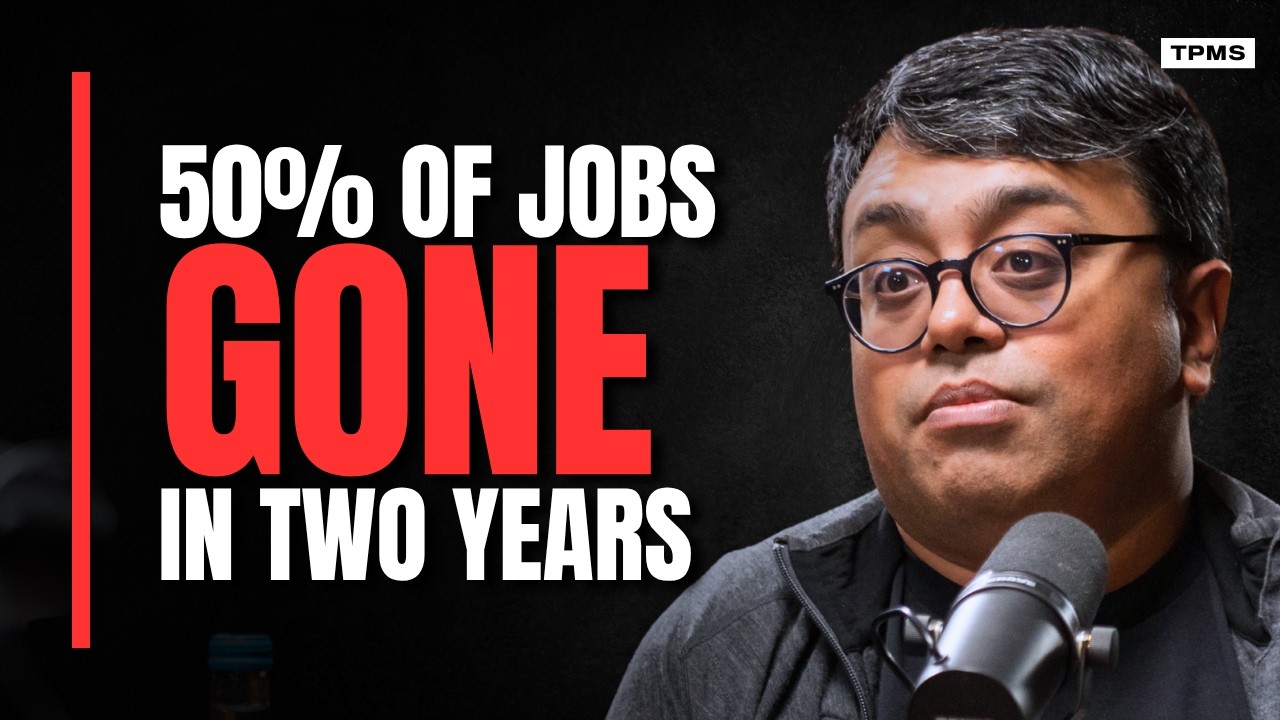
Paul’s Perspective:
This matters because business leaders do not need every prediction to come true for the disruption to be material. If labor economics, process design, and customer delivery are about to shift this quickly, waiting for certainty could leave companies with outdated cost structures and teams unprepared for what comes next.
Key Points in Video:
- The discussion claims roughly 50% of work tasks are vulnerable to near-term disruption rather than gradual change.
- Humanoid robots priced around $1.50 per hour are framed as a potential breakthrough for physical labor in human-built environments.
- The video points to more than 80 companies building humanoid robots, signaling accelerating competition and commercialization.
- Examples range from pressure on offshore call centers to fully automated dark factories, showing both service and industrial exposure.
- The conversation also raises governance issues, including AI licensing, restricted access to frontier models, and the use of advanced surveillance tools.
Strategic Actions:
- Assess which roles and tasks are remote, repeatable, and rules-based enough to be automated first.
- Model the cost impact of AI agents and low-cost robotics against current staffing and outsourcing structures.
- Redesign operating workflows around AI-assisted execution instead of layering tools onto old processes.
- Review customer service, call center, and back-office functions for near-term disruption risk.
- Track robotics adoption in industries that rely on human-shaped environments and manual processes.
- Develop workforce plans for retraining, redeployment, and role redesign before displacement accelerates.
- Monitor policy, licensing, and compliance developments that could limit access to advanced AI capabilities.
- Revisit pricing, margins, and competitive positioning as AI changes what customers expect for speed and cost.
The Bottom Line:
- AI could make many remote and repeatable jobs cheaper, faster, and more accurate within two years, forcing companies to rethink labor, operating models, and competitive advantage.
- The bigger issue is not just automation, but how fast humanoid robotics, open-source AI, and policy responses could reshape work, wages, and control across entire industries.
Dive deeper > Source Video:
Ready to Explore More?
If you are sorting out what AI means for your workforce, processes, or growth plan, we can help you evaluate the practical moves worth making. Our team works with companies to turn emerging technology into useful strategy and execution.