Paul’s Perspective:
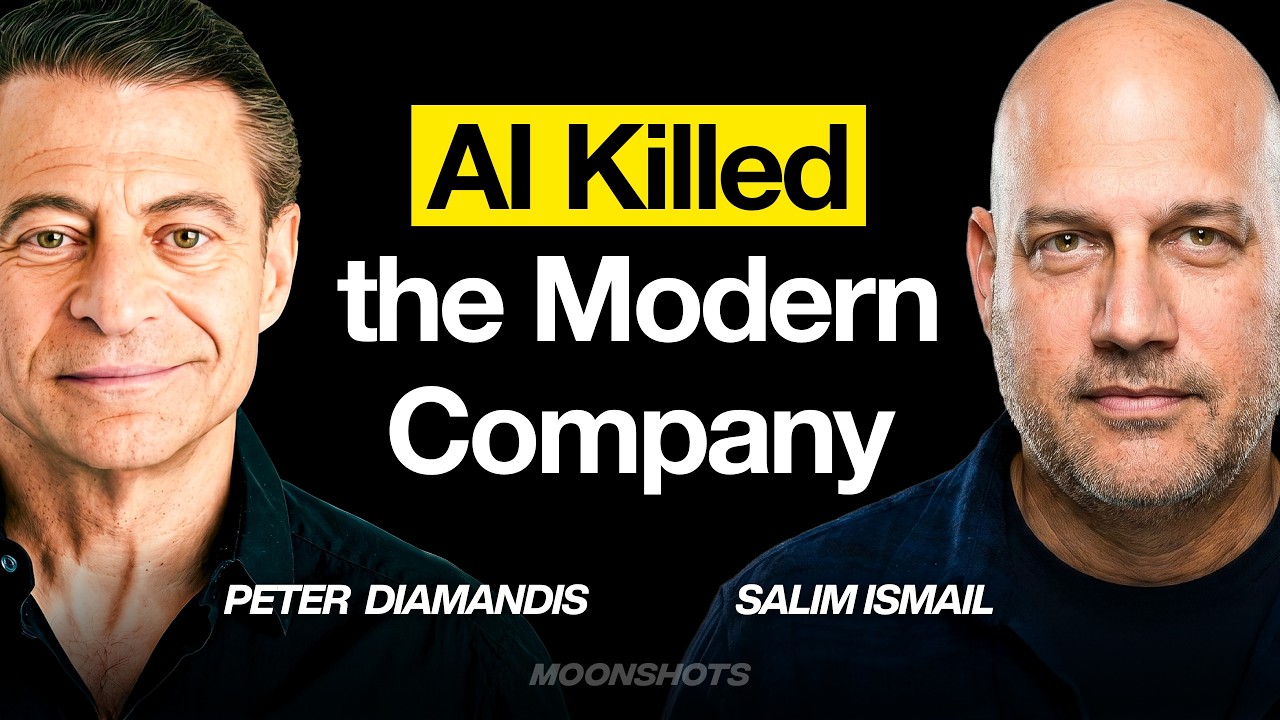
This matters because AI is no longer just a productivity layer on top of current operations; it is becoming an alternative operating model for how work gets done. Business leaders who treat this as a strategic redesign issue rather than a software purchase will be better positioned to reduce friction, improve speed, and stay competitive as organizational structures are reshaped.
Key Points in Video:
- The discussion frames a potential 2036 AI-native firm as up to 100x more performant than conventional organizations.
- A major challenge highlighted is the “middle 60% problem,” where large portions of existing roles and processes are vulnerable to redesign rather than simple automation.
- The transition to AI-native operations is presented as a four-phase evolution, giving leaders a roadmap instead of treating AI adoption as a one-time tool rollout.
- A six-step rewrite methodology is outlined for reworking workflows, roles, and decision processes around AI agents.
- Cross-firm operations may increasingly depend on AI agents interacting directly with other agents, changing how companies coordinate with partners, vendors, and customers.
Strategic Actions:
- Understand the fiduciary wedge between human judgment and expanding AI capability.
- Define what an organizational singularity means for your company’s structure and operating model.
- Use an AI-native architecture such as an ExO-style model to map the future-state organization.
- Assess where agent-to-agent workflows can improve coordination inside the business and across external partners.
- Address the middle 60% of roles and processes that are likely to be redesigned.
- Move through the four phases of becoming AI-native rather than approaching AI as isolated experiments.
- Apply a sequenced six-step rewrite methodology to core workflows and decisions.
- Evaluate which roles, layers, and functions will remain valuable in an AI-native firm and which will not.
The Bottom Line:
- AI agents and AI-native workflows are poised to redesign companies far faster than traditional org charts and management layers can respond.
- Leaders who rethink structure, decision rights, and operating models now could build firms that are dramatically more adaptive, efficient, and scalable.
Dive deeper > Source Video:
Ready to Explore More?
If you are sorting through what AI-native operations should look like in your business, we can help our team work with leaders to turn these ideas into practical operating and workflow changes. We bring strategy, process, and implementation together so the move is useful, not theoretical.