Paul’s Perspective:
This matters because additive manufacturing adoption often stalls when parts are too weak, too slow, or too limited for real production use. If this approach delivers on strength and speed, it could expand where 3D printing makes economic and operational sense for product development, tooling, and low-volume manufacturing.
Key Points in Video:
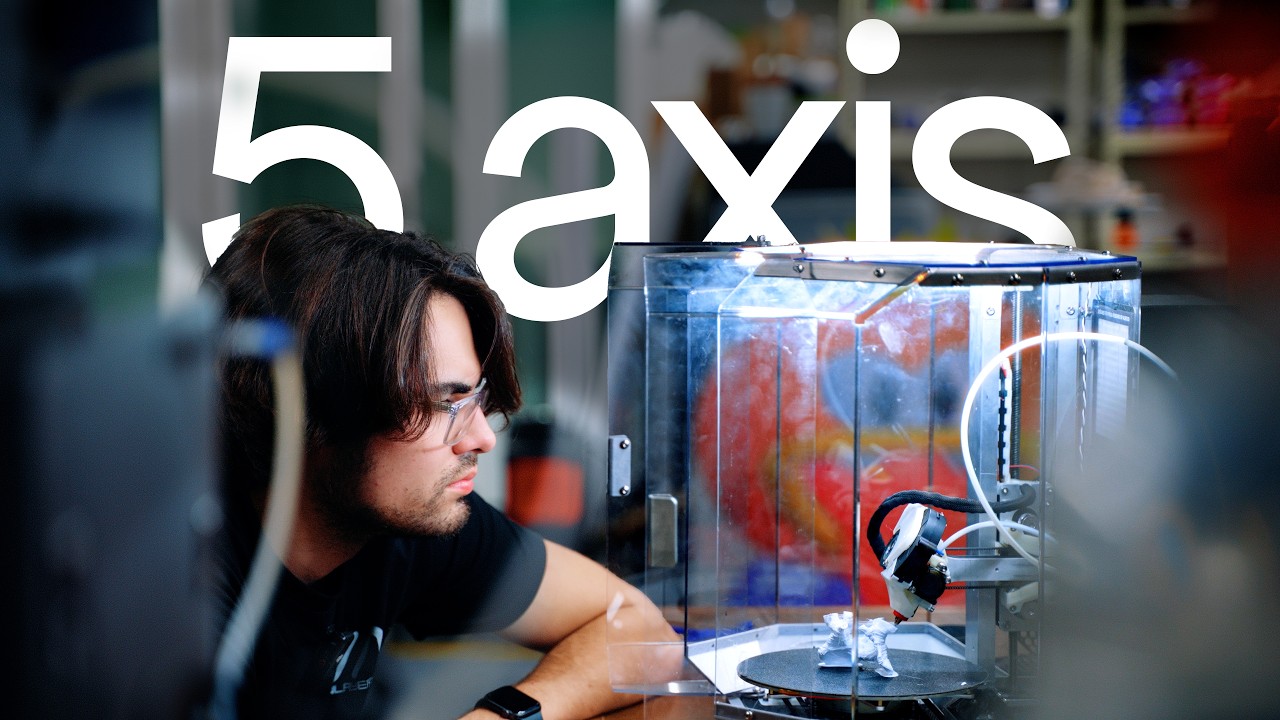
- The system uses 5-axis motion instead of standard flat-layer printing, allowing material to be deposited along more optimal paths.
- Printing along the geometry of a part can improve structural performance by reducing the weak points commonly found between layers.
- The company pairs its printer with proprietary slicer software, highlighting that software is as critical as hardware in unlocking better print outcomes.
- The value proposition centers on two measurable business outcomes: faster production and stronger finished parts.
Strategic Actions:
- Identify the core limitations of conventional layer-by-layer 3D printing.
- Use 5-axis printer movement to change how material is deposited across the part.
- Apply advanced slicer software to generate more effective toolpaths.
- Print parts in ways that better follow geometry and load requirements.
- Improve finished-part strength while reducing production time.
The Bottom Line:
- A 5-axis 3D printing approach can produce stronger parts faster by solving the weakness and inefficiency caused by traditional layer-by-layer printing.
- By combining new hardware with advanced slicing software, it points to a more capable way to manufacture complex parts with fewer compromises.
Dive deeper > Source Video:
Ready to Explore More?
If you are evaluating where advanced manufacturing fits in your business, we can help our team assess the practical use cases, economics, and workflow impact. We work together with clients to turn emerging technology into clear operating advantage.