Paul’s Perspective:
This matters because useful robotics depends less on flashy movement and more on reliable manipulation in real work settings. For business leaders tracking automation, the combination of dexterous hardware and AI-ready training methods signals a meaningful step toward robots handling more variable, hands-on tasks with less custom programming.
Key Points in Video:
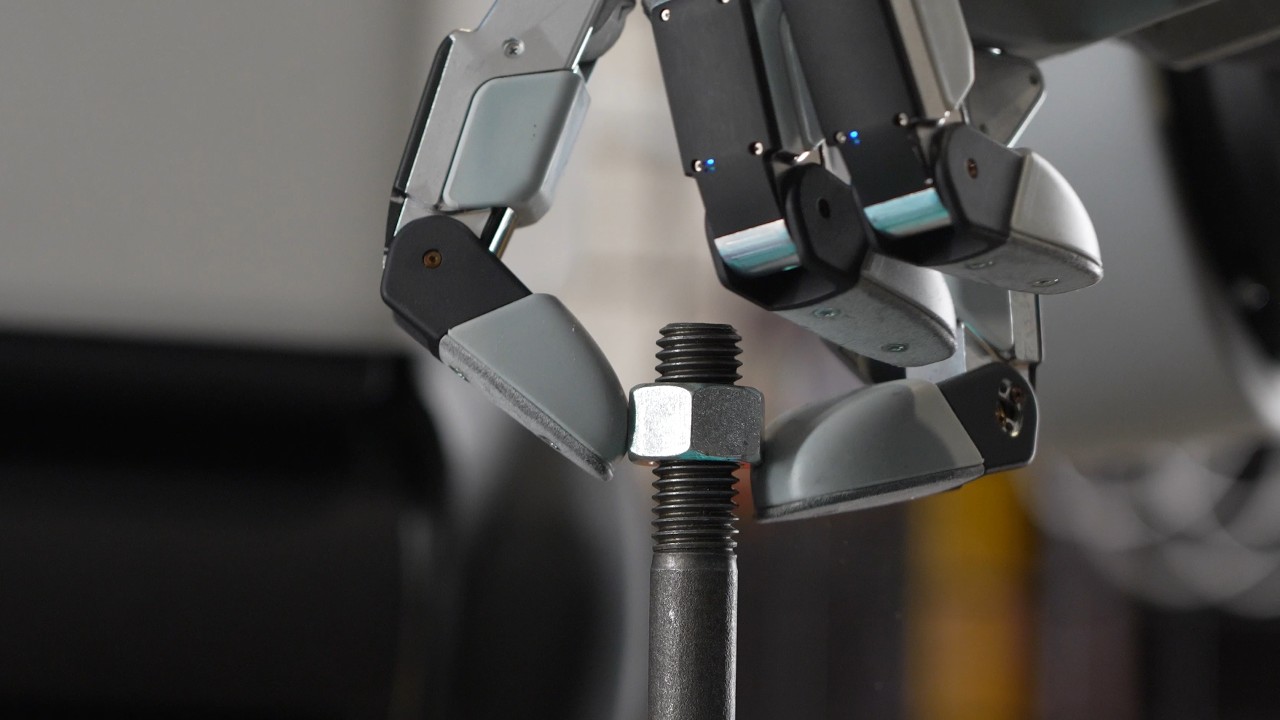
- The hand features 13 degrees of freedom, enabling a wider range of grasping and manipulation capabilities than simpler end effectors.
- Direct actuation can improve control responsiveness and precision for complex physical interactions.
- The system was built for high-fidelity simulation, which helps reduce the gap between virtual training and real-world performance.
- Sim-to-real reinforcement learning is a key enabler for scaling robot training without relying entirely on costly physical trial and error.
Strategic Actions:
- Design robot hands specifically for dexterous physical work rather than simple gripping.
- Incorporate 13 degrees of freedom to expand manipulation range and task flexibility.
- Use direct actuation to improve precision and control in complex movements.
- Build the hardware to support high-fidelity simulation from the start.
- Train capabilities through sim-to-real reinforcement learning to accelerate deployment.
- Apply the system to practical, real-world tasks where adaptable handling is required.
The Bottom Line:
- Boston Dynamics’ new Atlas hands are designed for dexterous physical tasks, with 13 degrees of freedom and direct actuation that support more precise, human-like manipulation.
- By pairing hardware built for high-fidelity simulation with sim-to-real reinforcement learning, this advances how robots can be trained faster and deployed into practical work environments.
Dive deeper > Source Video:
Ready to Explore More?
If you’re evaluating where robotics and AI may fit into your operations, we can help our team assess the practical use cases, process impact, and implementation path. We work with clients to turn emerging technology into grounded business decisions.