
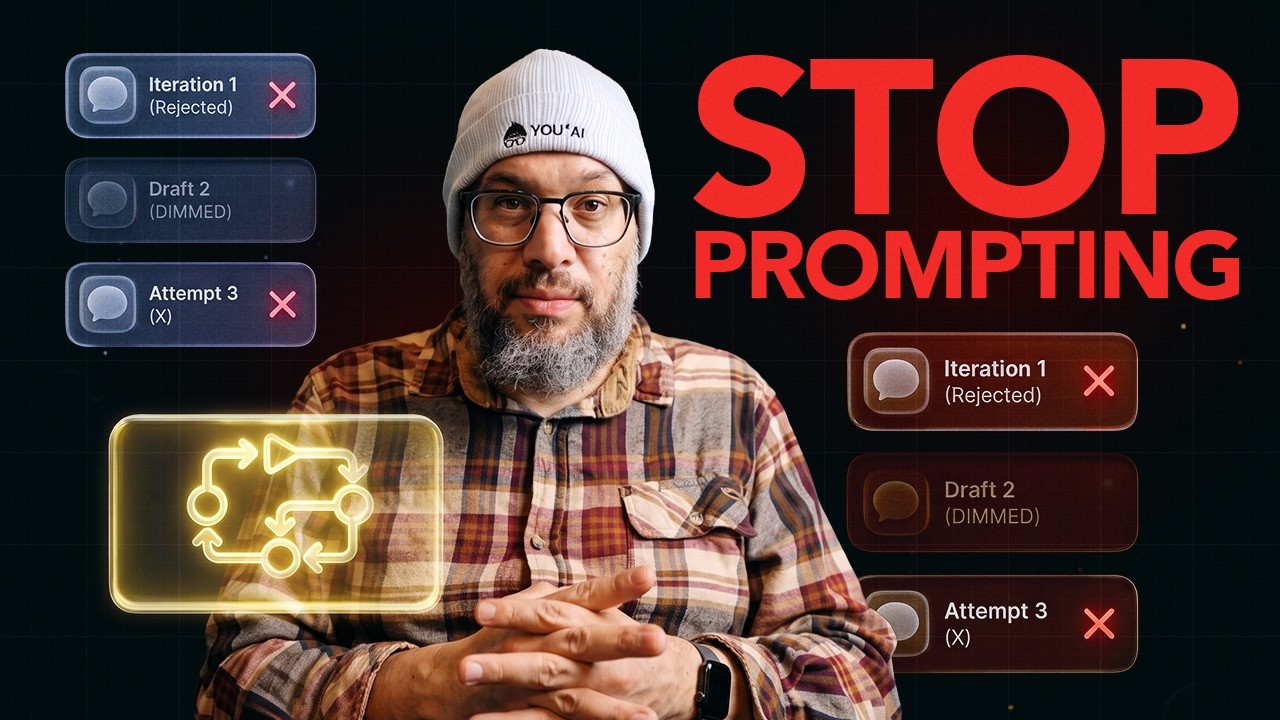
Paul’s Perspective:
This matters because most businesses do not need more isolated AI experiments; they need dependable operating patterns that save time without creating new risk. When leaders define where automation should continue and where people must decide, AI shifts from novelty to practical leverage.
Key Points in Video:
- The framework distinguishes between a one-off prompt, a recurring loop, and a “loop of loops” that coordinates multiple connected jobs.
- A practical starting point is simple, repeatable use cases such as sales follow-up, research monitoring, or routine household and admin tasks.
- Trust comes from clear boundaries: each loop should know what to do automatically, what changed, and exactly when to stop and ask for input.
- The video outlines a 13-chapter progression from defining loops at 01:31 to choosing a safe first project at 13:49.
Strategic Actions:
- Identify recurring tasks that repeat weekly or frequently enough to justify automation.
- Separate one-off prompts from true loops that can retain context and monitor changes over time.
- Map how related loops can hand off updates to each other as a coordinated system.
- Set clear boundaries for what each loop can do without approval.
- Define the stop points where the loop must pause and ask for human judgment.
- Start with a low-risk, high-repeat workflow such as sales tracking or research monitoring.
- Review results regularly and refine the loop before expanding into more connected processes.
The Bottom Line:
- AI becomes far more useful when it manages recurring work in loops that remember context, detect change, and pause when human judgment is needed.
- The real advantage is not better prompts but better system design that reduces mental load, improves trust, and turns scattered tasks into controlled workflows.
Dive deeper > Source Video:
Ready to Explore More?
If you are thinking through where AI loops fit in your business, we can help our team map the right workflows, guardrails, and handoff points. We work with companies to turn ideas like this into practical systems that save time and reduce friction.