
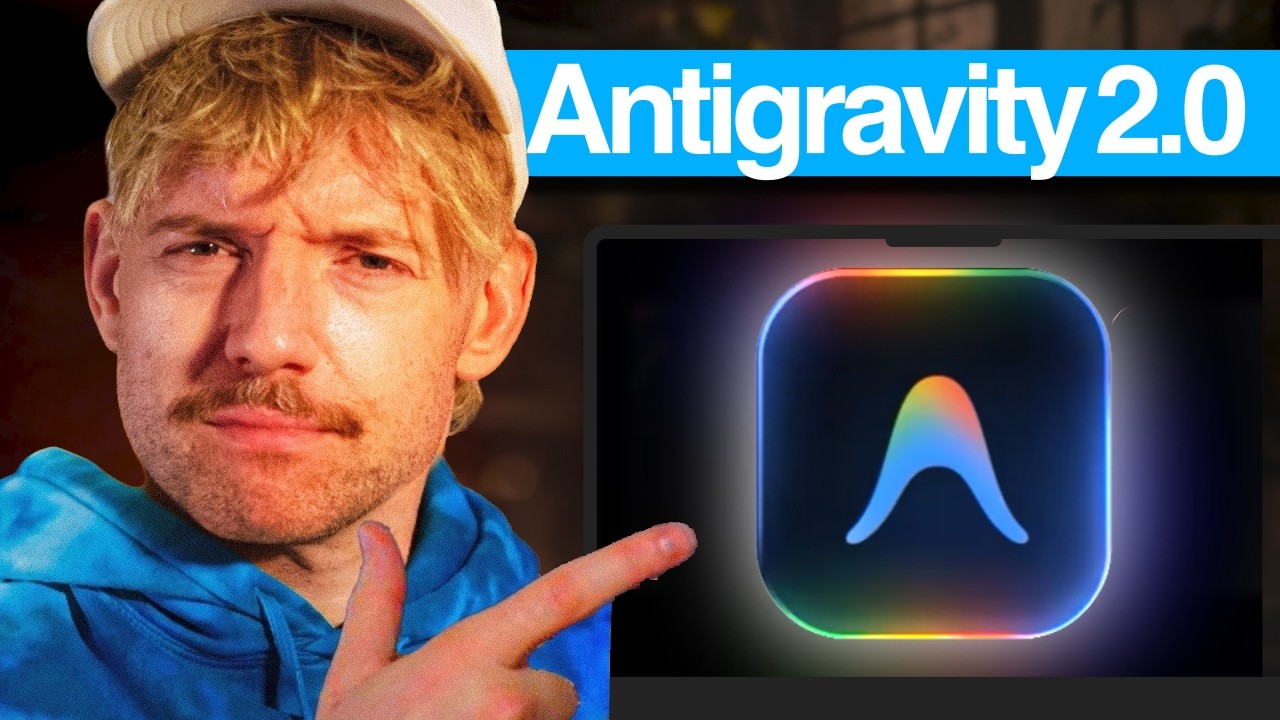
Paul’s Perspective:
This matters because AI coding tools are moving beyond single-chat assistance into coordinated workflows that resemble a real development team. Business leaders should pay attention because these capabilities can shorten delivery cycles, improve developer leverage, and create a clearer path from prototype to production.
Key Points in Video:
- Gemini 3.5 Flash is positioned as outperforming the prior Pro model across benchmarks, giving teams a lower-latency option without sacrificing capability.
- The platform supports multiple AI agents working in parallel, which can reduce bottlenecks in coding, testing, and task delegation.
- New terminal and CLI workflows make it possible to create custom subagents and integrate them into existing development environments.
- The walkthrough highlights scheduled tasks, project-based organization, and a revised interface aimed at making multi-agent orchestration more usable in day-to-day development.
Strategic Actions:
- Review Google’s three major releases and where AntiGravity 2.0 fits in the stack.
- Evaluate Gemini 3.5 Flash as the model layer for faster, benchmark-strong coding tasks.
- Explore AntiGravity 2.0’s updated interface and parallel-agent capabilities.
- Identify current limitations before adopting it in production workflows.
- Set up projects and scheduled tasks to structure repeatable development work.
- Install the AntiGravity CLI and test terminal-based subagent workflows.
- Apply a multi-agent strategy by assigning specialized roles to different AI agents.
- Integrate the CLI into an existing coding environment to build and ship applications more efficiently.
The Bottom Line:
- Google’s latest AntiGravity 2.0 update brings parallel AI agents, terminal-based subagent workflows, and faster app-building powered by Gemini 3.5 Flash.
- For teams building software, it signals a practical shift toward multi-agent development that can speed execution while improving coding performance and workflow flexibility.
Dive deeper > Source Video:
Ready to Explore More?
If your team is evaluating AI-assisted development workflows, we can help assess where multi-agent tooling fits and how to apply it in practical ways. We work together to turn new capabilities like this into useful, scalable business processes.