
Paul’s Perspective:
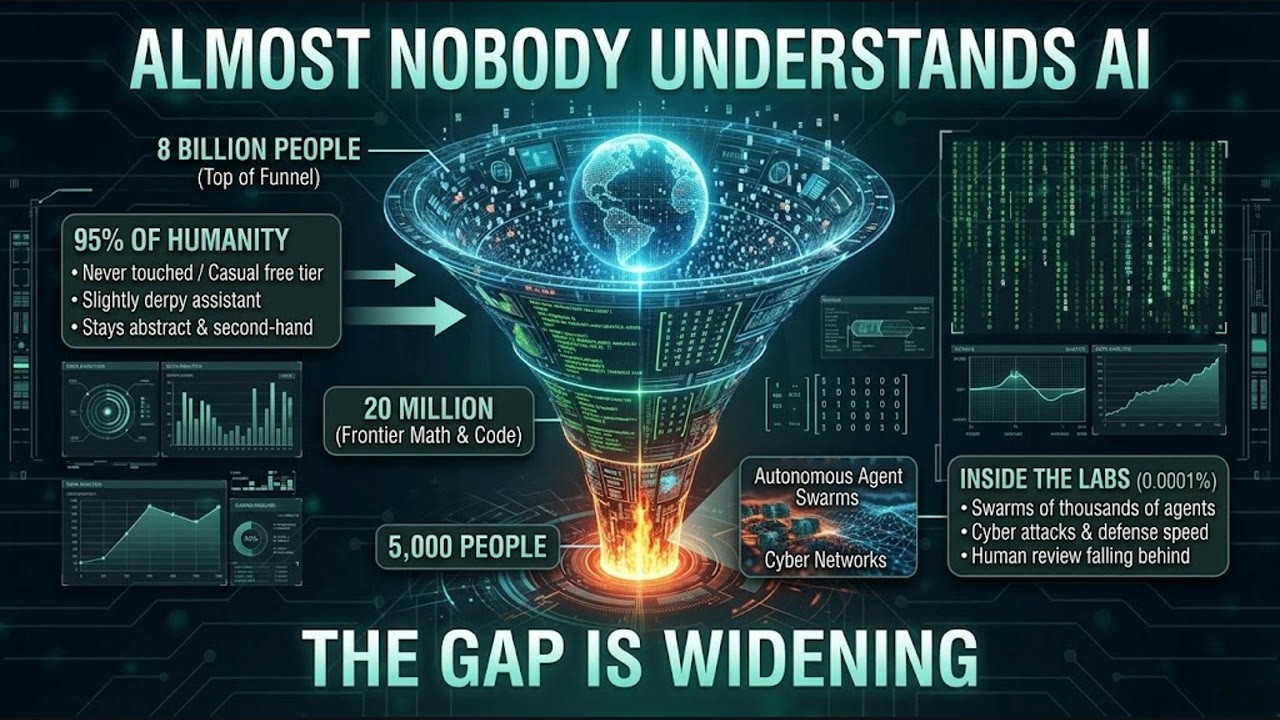
This matters because leaders may have less time than they think to move from AI curiosity to AI governance, workforce planning, and infrastructure strategy. If superintelligence development starts being treated like a national priority rather than a normal product cycle, the risks and opportunities for mid-market companies both get bigger very quickly.
Key Points in Video:
- The discussion spans more than 2 hours and covers at least 10 major themes, including recursive self-improvement, AI personhood, U.S.-China coordination, memory constraints, robotics, and the future of work.
- One core argument is that AI may be nearing a “1942 moment,” implying a shift from experimentation to a coordinated national or geopolitical push with Manhattan Project-scale urgency.
- The conversation points to billions of AI agents and as many as 10 million humanoid robots as signals that AI’s impact may extend far beyond software into labor, operations, and physical-world execution.
- Hardware limits also matter: RAM and compute constraints are framed as practical bottlenecks that could shape which companies scale AI fastest and where competitive advantage concentrates.
Strategic Actions:
- Assess whether your leadership team has a clear view of how fast AI capability gains could affect your industry.
- Evaluate where autonomous AI agents could change workflows, staffing models, customer service, and decision-making.
- Monitor infrastructure dependencies such as compute, memory, and platform concentration that could affect cost and scalability.
- Build governance guardrails for acceptable risk, data use, and human oversight before AI adoption expands.
- Track geopolitical and regulatory developments that may influence access, compliance, and competitive dynamics.
- Review long-term workforce implications, including where software agents and robotics may augment or replace roles.
The Bottom Line:
- AI leaders are signaling a wartime-style acceleration toward superintelligence, with growing pressure to tolerate meaningful social, economic, and safety tradeoffs along the way.
- The bigger issue for business is not whether every claim is right, but how fast AI capabilities, infrastructure bottlenecks, autonomous agents, and geopolitical competition could reshape work, regulation, and strategic planning.
Dive deeper > Source Video:
Ready to Explore More?
If your team is sorting through what fast-moving AI change means for operations, governance, or growth, we can help you turn the noise into a practical plan. We work together with leadership teams to identify where AI fits, where it does not, and how to move forward with clarity.