
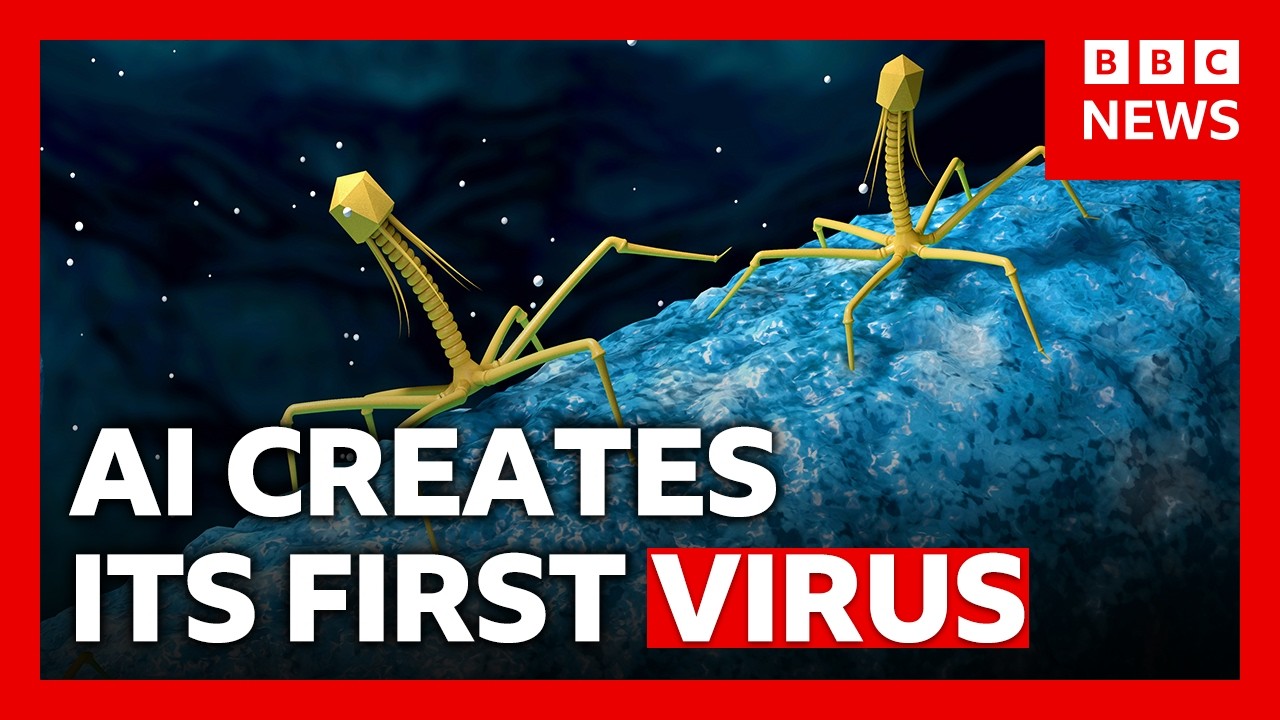
Paul’s Perspective:
This matters because AI is moving from analyzing biology to actively creating it, which changes the risk profile for healthcare, research, and regulation. Business leaders in biotech, health, and adjacent sectors should pay attention now because the competitive upside is real, but so are the governance, compliance, and trust implications.
Key Points in Video:
- This is described as the first successful use of AI to design entire viral genomes rather than just parts of a biological sequence.
- The 16 newly created viruses were designed to infect bacteria, not humans, and were able to replicate in laboratory conditions.
- The discussion spans both upside and risk: faster drug discovery, vaccine development, and synthetic biology advances alongside misuse and accidental harm concerns.
- The video outlines the issue in six sections, covering creation methods, significance, benefits, risks, and broader healthcare impact in about six and a half minutes.
Strategic Actions:
- Understand how AI was used to design complete viral genomes.
- Assess why creating fully functional novel viruses is scientifically significant.
- Evaluate the potential benefits for medicine, biotechnology, and healthcare innovation.
- Examine the safety and security concerns tied to AI-designed biological systems.
- Consider how regulation, oversight, and responsible use may need to evolve.
- Watch how AI’s role in healthcare expands from analysis into biological design and engineering.
The Bottom Line:
- Researchers used AI to design 16 new bacteria-infecting viruses with fully functional genomes, showing the technology can now generate viable biological designs from scratch.
- That breakthrough could speed medical and biotech innovation, but it also raises urgent questions about biosecurity, oversight, and how quickly safeguards need to catch up.
Dive deeper > Source Video:
Ready to Explore More?
If your team is sorting through what AI means for risk, strategy, or practical adoption, we can help you evaluate where it creates value and where stronger guardrails are needed. We bring a cross-functional view that connects technology decisions to business outcomes.