Paul’s Perspective:
This matters because it points to a faster, lower-friction way to produce digital environments from minimal inputs. For businesses creating video, training, demos, events, or branded content, that can reduce production effort, speed up experimentation, and make high-quality virtual spaces more accessible.
Key Points in Video:
- The workflow starts with just 2 video frames, significantly reducing the reference material typically needed for 3D scene reconstruction.
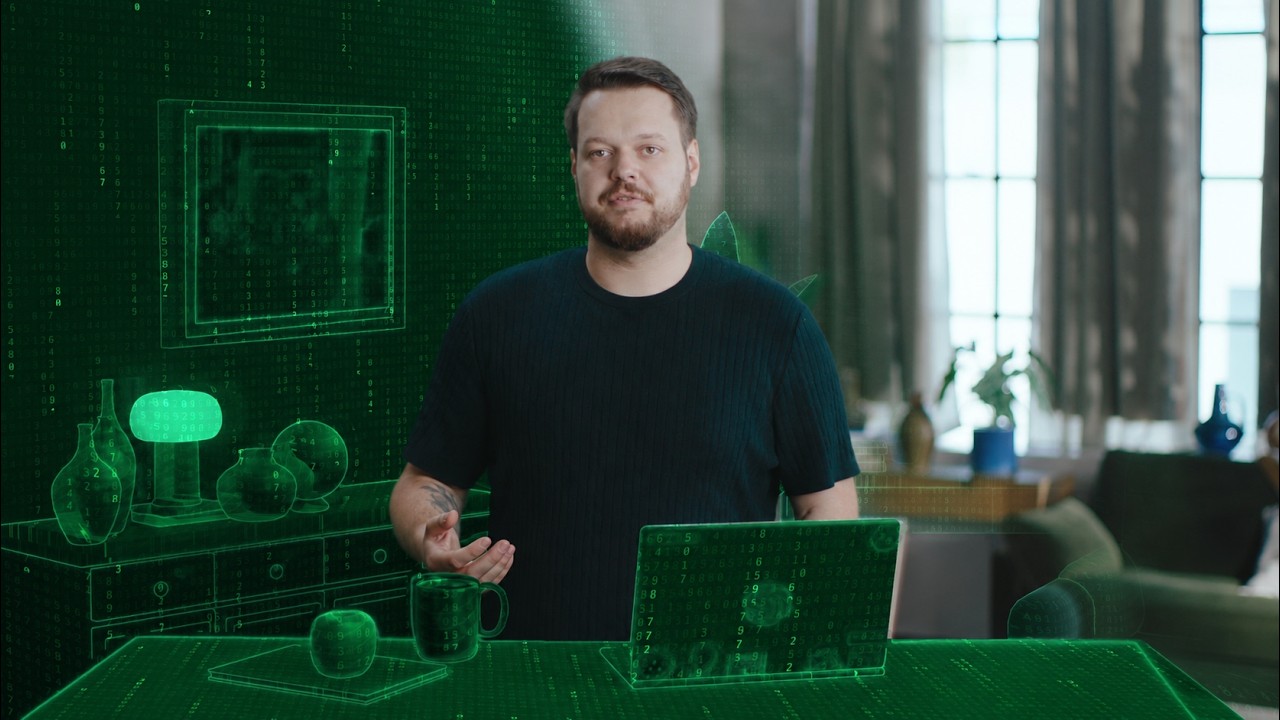
- The model works inside Codex and uses Blender to build and refine the room as a usable 3D set.
- It can modify visual elements such as decor and lighting, helping teams iterate on scene design without rebuilding from scratch.
- The output is not static: the scene can become an interactive environment or a virtual webcam background for ongoing use.
Strategic Actions:
- Capture two video frames from the room or scene.
- Use GPT-6.2 Astra in Codex to interpret the space and reconstruct it.
- Generate the room as a 3D set in Blender.
- Edit the environment by changing decor, layout details, or lighting.
- Turn the finished scene into an interactive space or virtual webcam background.
The Bottom Line:
- GPT-6.2 Astra can recreate a room from only two video frames, then generate editable 3D environments with updated decor, lighting, and interactive elements.
- That makes it easier to turn simple source footage into reusable virtual sets, webcam backgrounds, and production assets with less manual modeling work.
Dive deeper > Source Video:
Ready to Explore More?
If virtual production, 3D content, or AI-assisted workflows are on your radar, our team can help you assess where these tools fit and how to use them practically in your business.