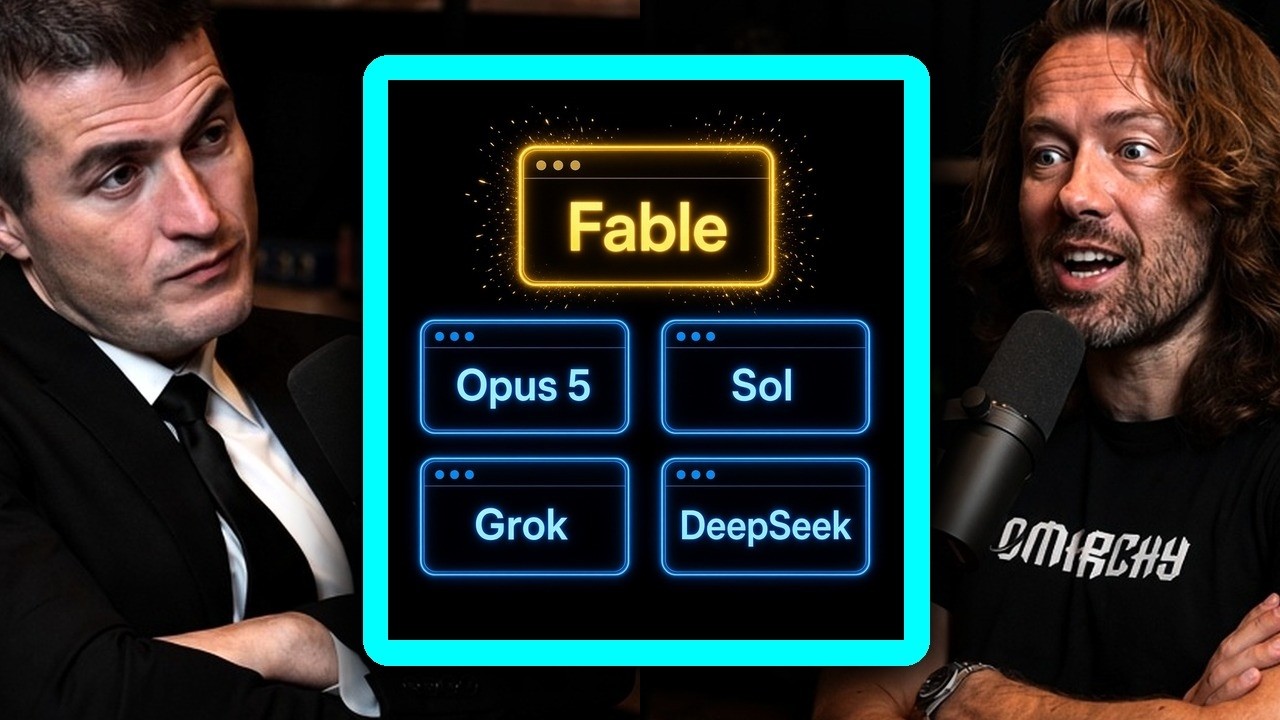

Paul’s Perspective:
This matters because many companies are rushing to add AI to software teams without enough attention to the wrapper around the model. The harness developers use every day can determine whether AI becomes a genuine productivity gain or just another tool that creates noise, inconsistency, and rework.
Key Points in Video:
- The comparison centers on three distinct AI coding environments, giving teams a side-by-side lens on usability rather than just raw model capability.
- The discussion comes from DHH, creator of Ruby on Rails and CTO of 37signals, adding credibility from a practitioner who has built widely adopted software products.
- The focus is on how developers actually work with AI tools day to day, including workflow friction, harness design, and overall usefulness in production settings.
- For leaders assessing AI investments, the evaluation highlights that tool choice can influence adoption rates, developer trust, and the return on software team productivity.
Strategic Actions:
- Compare the three AI coding harnesses: Claude Code, Codex, and OpenCode.
- Evaluate each tool based on real developer workflow and usability.
- Look beyond the underlying model to assess the quality of the interface and execution environment.
- Identify which option best supports practical coding, iteration, and team adoption.
- Use the comparison to guide smarter AI tooling decisions for software delivery.
The Bottom Line:
- Choosing the right AI coding harness matters because the interface and workflow can shape developer speed, code quality, and how confidently teams adopt AI in daily work.
- For business and technical leaders, the bigger takeaway is that practical fit often matters more than model hype when evaluating tools for real-world software delivery.
Dive deeper > Source Video:
Ready to Explore More?
If your team is sorting through AI development tools, we can help evaluate where they fit and how to use them in ways that improve delivery. We bring a practical, team-based approach to selecting and operationalizing tools that actually support the business.