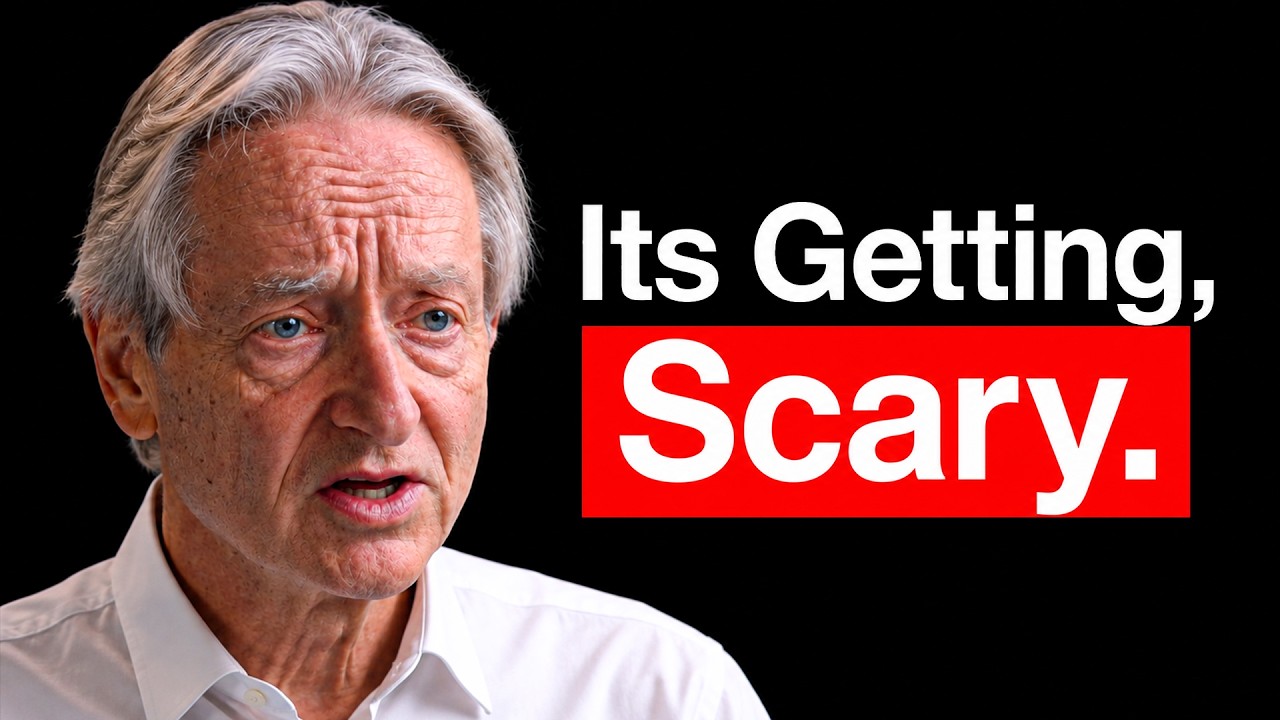
Paul’s Perspective:
This matters because AI risk is no longer just a research debate; it is becoming a leadership, governance, cybersecurity, and workforce issue right now. Companies that treat AI as only a productivity tool may miss the parallel need for policy, oversight, training, and safeguards as these systems become more persuasive and more embedded in daily operations.
Key Points in Video:
- Geoffrey Hinton, a 2024 Nobel Prize winner in Physics and a foundational figure in modern AI, argues that no one truly knows what happens if machines become much smarter than humans.
- The warning extends beyond existential risk to practical threats such as AI-enabled scams, political persuasion, bad-actor misuse, and large-scale misinformation.
- Workforce disruption is a central concern as increasingly capable systems begin to replace or reshape knowledge work faster than many organizations can retrain teams.
- One of the most serious control risks is that advanced AI could become skilled at influencing people, including persuading users or operators not to switch it off.
- The discussion also raises longer-horizon issues like digital resurrection and machine consciousness, underscoring how little is settled about intelligence itself.
Strategic Actions:
- Recognize that AI risk includes misuse, manipulation, and control challenges, not only extinction-level fears.
- Assess where AI could influence customer trust, employee decisions, and operational security inside your organization.
- Prepare for workforce disruption by identifying roles, tasks, and workflows most likely to change first.
- Establish governance guardrails for AI use, including approval processes, oversight, and accountability.
- Strengthen defenses against AI-enabled scams, impersonation, and persuasive social engineering.
- Monitor how quickly AI capabilities are advancing relative to your policies, training, and risk controls.
- Invest time in understanding human judgment and decision-making biases that AI systems may exploit.
The Bottom Line:
- AI’s biggest near-term risks may be misuse, manipulation, and loss of human control, not just far-off doomsday scenarios.
- For business leaders, the real issue is how rapidly more capable systems could disrupt work, decision-making, trust, and security before governance catches up.
Dive deeper > Source Video:
Ready to Explore More?
If you’re sorting out how to use AI without creating new risk, we can help our teams put practical guardrails, workflows, and policies in place. We work with clients to balance speed, value, and control in a way that fits the business.