Paul’s Perspective:
This matters because it challenges the assumption that every serious AI knowledge system needs a vector database. For business leaders, the bigger takeaway is practical: simpler, cheaper, more transparent knowledge architectures may be good enough for many internal AI use cases if your team can keep the underlying content clean and current.
Key Points in Video:
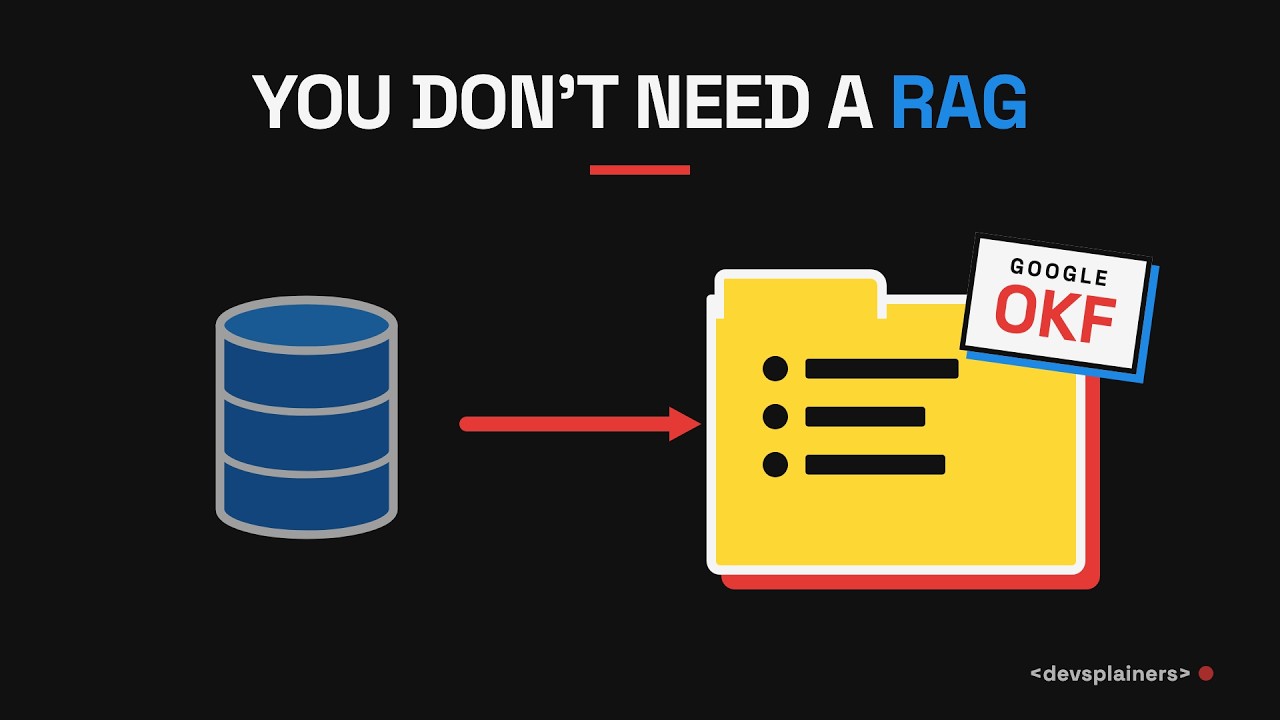
- OKF is presented as a Google Cloud specification published in June 2026 for organizing knowledge in folders of linked Markdown files.
- The format uses simple bundles and one-concept-per-file organization, with just a single required field in the spec.
- Unlike traditional RAG patterns, this approach avoids redoing retrieval and embedding-driven context assembly on every prompt.
- Plain text in Git can make agent knowledge easier to inspect, version, and govern than a separate vector database stack.
- It is not positioned as a replacement for MCP and does not solve shared-team issues like stale content or inconsistent documentation by itself.
Strategic Actions:
- Understand how RAG and vector databases rebuild context for each query.
- Evaluate the OKF model of storing knowledge as linked Markdown files in folders.
- Organize content so each file covers a single concept with clear structure.
- Use version-controlled plain text, such as Git, to improve visibility and maintainability.
- Plan for the main risks: stale information, messy Markdown, and unclear meaning.
- Decide where a simple text-based knowledge layer is sufficient and where more advanced retrieval is still needed.
The Bottom Line:
- Google’s Open Knowledge Format stores AI knowledge as linked Markdown files, letting agents read structured context directly instead of rebuilding it with embeddings on every query.
- That can reduce complexity and cost for some AI workflows, but teams still need to manage freshness, file quality, and knowledge structure for it to work reliably.
Dive deeper > Source Video:
Ready to Explore More?
If you’re weighing AI knowledge approaches for your business, our team can help you sort through what’s practical, cost-effective, and worth implementing. We work together to turn ideas like this into usable systems that fit how your team actually operates.