Paul’s Perspective:
This matters because it shows how competitive advantage is often built through fast, visible iteration rather than waiting for a perfect final product. For business leaders, the lesson is straightforward: shorten feedback loops, turn learning into operational changes quickly, and use each version to move closer to scale, reliability, and better economics.
Key Points in Video:
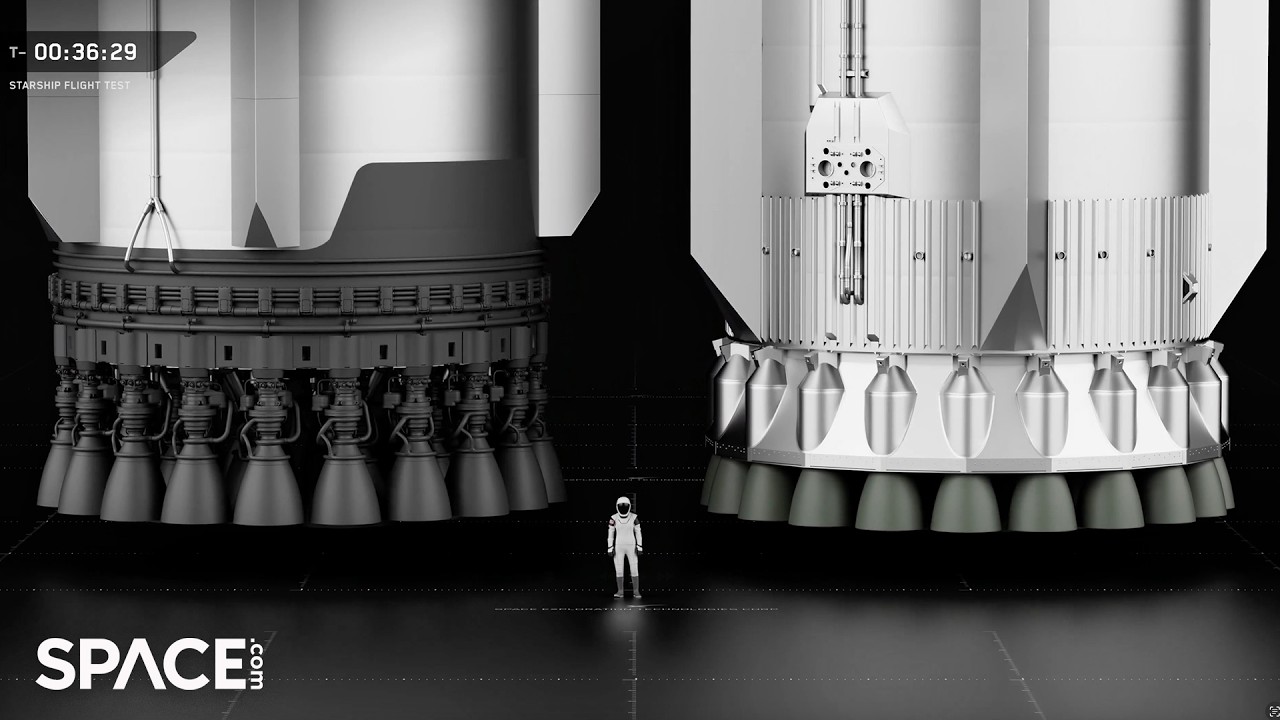
- The focus is on upgrades made before V3’s first launch attempt, highlighting how major systems can evolve materially between versions rather than through minor tuning alone.
- Starship remains a fully reusable megarocket concept, and version changes matter because even small efficiency gains can compound across payload, turnaround time, and mission economics.
- The comparison between V2 and V3 underscores a build-test-improve model, where engineering feedback is translated into hardware changes on compressed timelines.
- The video centers on practical differences in the vehicle’s design and readiness, giving viewers a clearer sense of where SpaceX is targeting improved performance and operational stability.
Strategic Actions:
- Outline the core upgrades introduced in Starship V3.
- Compare the new version against V2 to clarify what changed.
- Explain how those changes are intended to improve performance and reliability.
- Connect the upgrades to launch readiness and future mission capability.
- Use the V2-to-V3 shift as an example of rapid engineering iteration in practice.
The Bottom Line:
- Starship V3 introduces meaningful design upgrades aimed at improving performance, reliability, and launch readiness for SpaceX’s next-generation heavy-lift system.
- For leaders tracking innovation, it’s a clear example of how rapid iteration and engineering changes can accelerate capability in high-stakes, capital-intensive programs.
Dive deeper > Source Video:
Ready to Explore More?
If your team is working through big technology changes, we help organizations turn complex upgrades into practical plans and measurable progress. We can work with you to prioritize what matters and move from concept to execution with less friction.