Paul’s Perspective:
This matters because business leaders are not just managing a technology transition, but a human one. Companies that address fear, build adaptability, and help their people use AI productively will be far better positioned than those that focus only on the tools.
Key Points in Video:
- Near-term disruption is expected to include job cuts, higher unemployment, inflation, and new economic models such as universal high income.
- AI-driven demonetization could sharply reduce the cost of services through autonomy, robotics, personal AI assistants, and intelligent sensors.
- Emerging shifts discussed include orbital data centers, brain-computer interfaces, decentralized AI, home robots, and autonomous transportation.
- The Future Vision XPRIZE is positioned as an effort to fund more optimistic storytelling to counter fear-based technology narratives.
- Longer-term implications span longevity, healthspan, advanced materials, space expansion, and potentially AGI or ASI accelerating scientific discovery.
Strategic Actions:
- Recognize fear as a business risk alongside technical disruption.
- Adopt a creator mindset instead of remaining a passive consumer of AI.
- Ground teams in purpose, curiosity, and continuous learning to handle rapid change.
- Prepare for economic volatility including workforce disruption and shifting cost structures.
- Track where AI may demonetize services and alter your value proposition.
- Evaluate practical use cases for personal AI, automation, robotics, and autonomous systems.
- Watch emerging platform shifts such as decentralized AI, brain interfaces, and new compute infrastructure.
- Plan for a future where AI changes not only operations, but health, mobility, and customer expectations.
The Bottom Line:
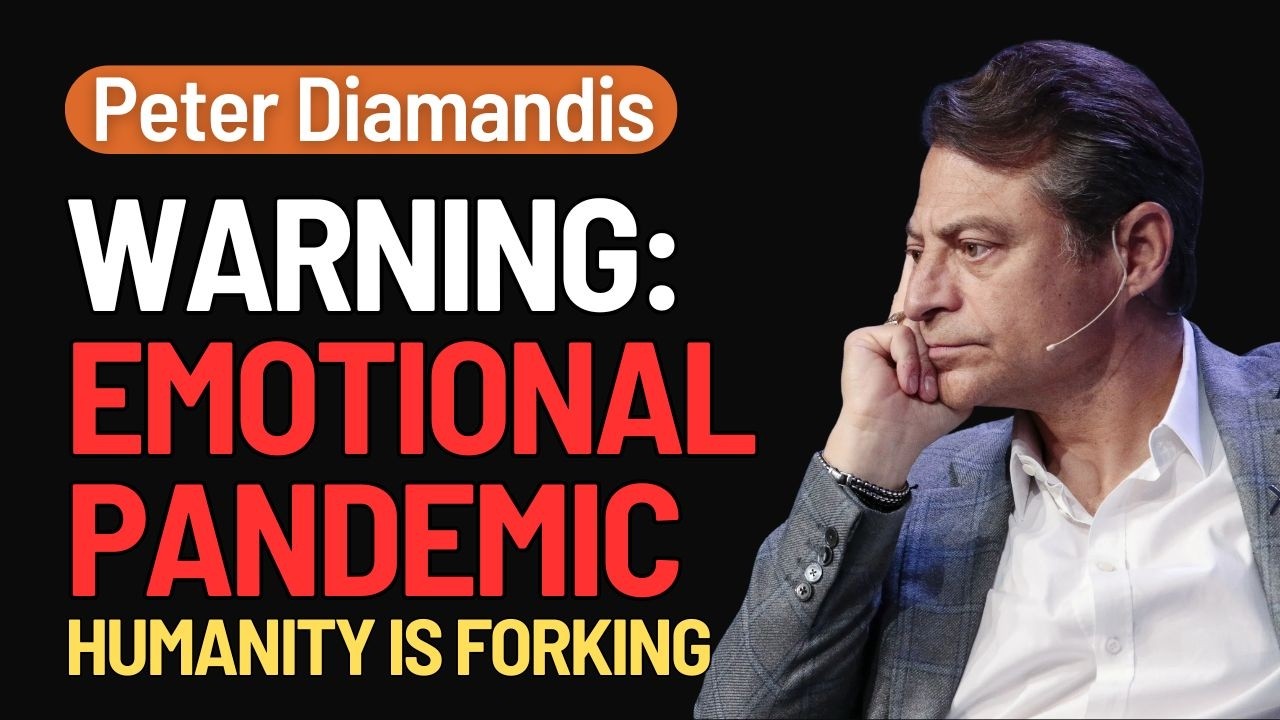
- AI may trigger an emotional pandemic driven by fear, job uncertainty, and relentless dystopian narratives, making mindset and purpose as critical as technical skill.
- The bigger opportunity is for leaders and teams to move from passive consumers to active creators as AI reshapes work, economics, and everyday life at extraordinary speed.
Dive deeper > Source Video:
Ready to Explore More?
If you want to sort through what these AI shifts mean for your business, we can help our team turn the noise into practical priorities, use cases, and next steps. We work alongside leaders to make adoption clearer, steadier, and more useful.