
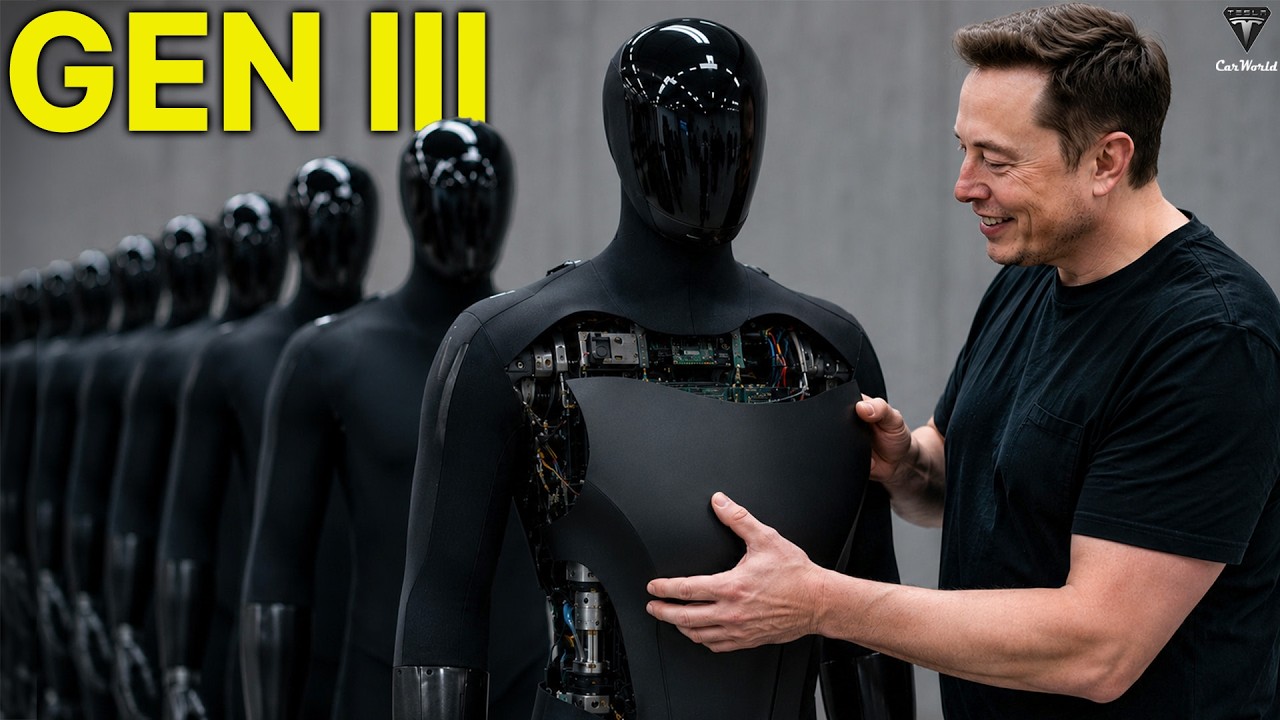
Paul’s Perspective:
This matters because the winner in humanoid robotics may not be the company with the flashiest demo, but the one that can manufacture reliably, reduce unit costs, and integrate robots into real operations. For business leaders, that signals a future where labor models, plant economics, and automation planning could change faster than many expect.
Key Points in Video:
- The focus is not just robot design but high-volume production at Gigafactory Texas and Fremont.
- New knee joint patent details suggest Tesla is refining mobility, durability, and practical real-world performance.
- Tesla’s advantage appears tied to manufacturing scale, an area where competitors such as Xiaomi and XPeng may struggle to close the gap quickly.
- The broader play combines robotics, AI, and automation into a long-term platform strategy rather than a single product launch.
Strategic Actions:
- Scale humanoid robot production through Tesla’s major factory network.
- Advance Optimus Gen 3 hardware with design improvements such as updated knee joint engineering.
- Combine AI, robotics, and automation into a practical deployment strategy.
- Use manufacturing scale to lower costs and increase output over time.
- Expand robot use cases across industrial environments as production matures.
The Bottom Line:
- Tesla is positioning Optimus Gen 3 as a mass-produced humanoid robot, pairing AI advances with factory-scale manufacturing that few rivals can match.
- If Tesla succeeds, the real disruption will come from production speed, cost reduction, and the ability to deploy robots across industrial operations at meaningful scale.
Dive deeper > Source Video:
Ready to Explore More?
If humanoid robotics and automation are starting to factor into your planning, we can help our team assess where these shifts may create practical opportunities for your business. We work together to turn emerging tech into grounded strategy and execution.