Paul’s Perspective:
Business leaders should care because this reframes AI from a helpful assistant into operating infrastructure for knowledge work. If that shift is real, the companies that redesign workflows, roles, and delivery models early will have a material speed and cost advantage over those still treating AI as a side tool.
Key Points in Video:
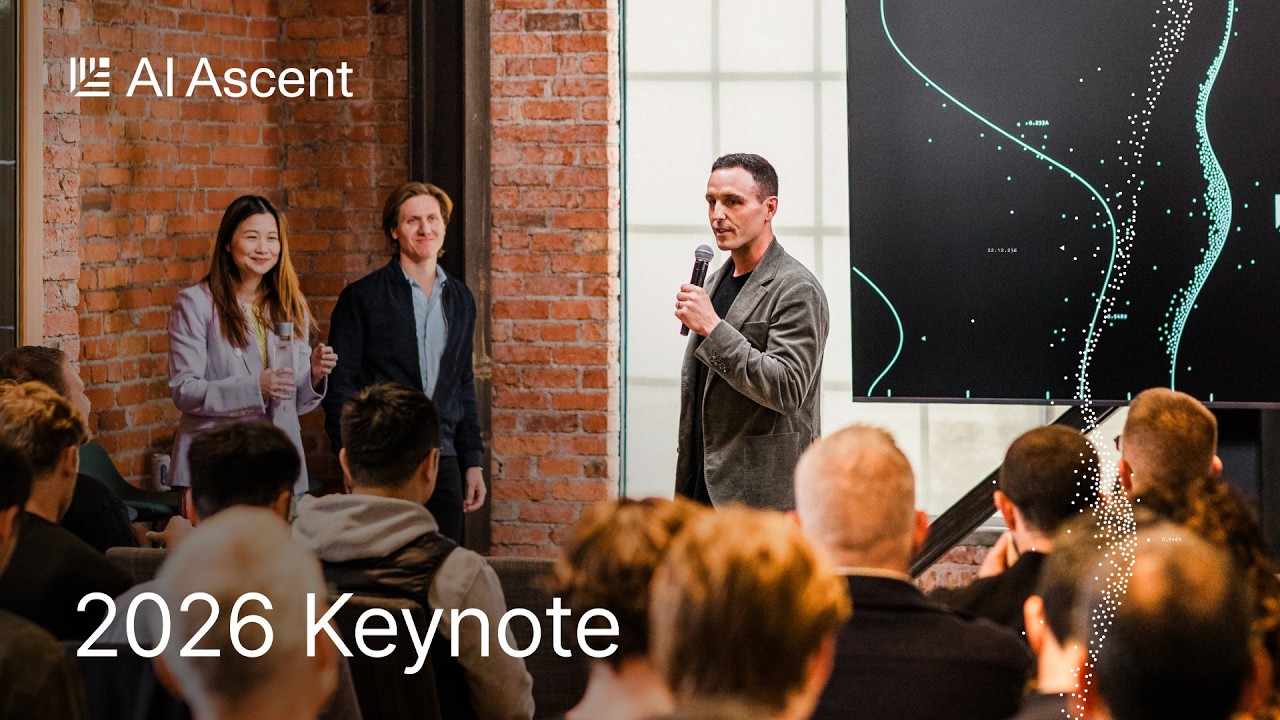
- The central claim is that AI should be viewed less like the internet or mobile and more like a step-change in computation itself.
- Long-horizon agents are positioned as the next major leap, taking on multi-step work that previously required sustained human oversight.
- The productivity comparison is industrial in scale: AI is framed as doing for cognitive labor what mechanization did for manual labor.
- The timeline is the standout metric, with ideas once expected to take 100 years now potentially being built in roughly 100 days.
Strategic Actions:
- Reframe AI as a computational platform, not just a better interface for communication.
- Identify knowledge-work processes where long-horizon agents can handle multi-step tasks end to end.
- Redesign workflows around AI-supported execution rather than human-only handoffs.
- Prioritize use cases where cycle time can shrink dramatically, especially in product development and operations.
- Evaluate how faster build times change staffing, service delivery, and competitive positioning.
The Bottom Line:
- AI is shifting from a communication tool to a new computational layer that can perform increasingly complex cognitive work across the business.
- That matters because long-horizon agents could compress years of product building, operations, and knowledge work into weeks or even days.
Dive deeper > Source Video:
Ready to Explore More?
If you are sorting out where AI can create real operating leverage, we can help our team work through the use cases, workflow changes, and rollout plan with you. We bring strategy, implementation, and practical business context together.