
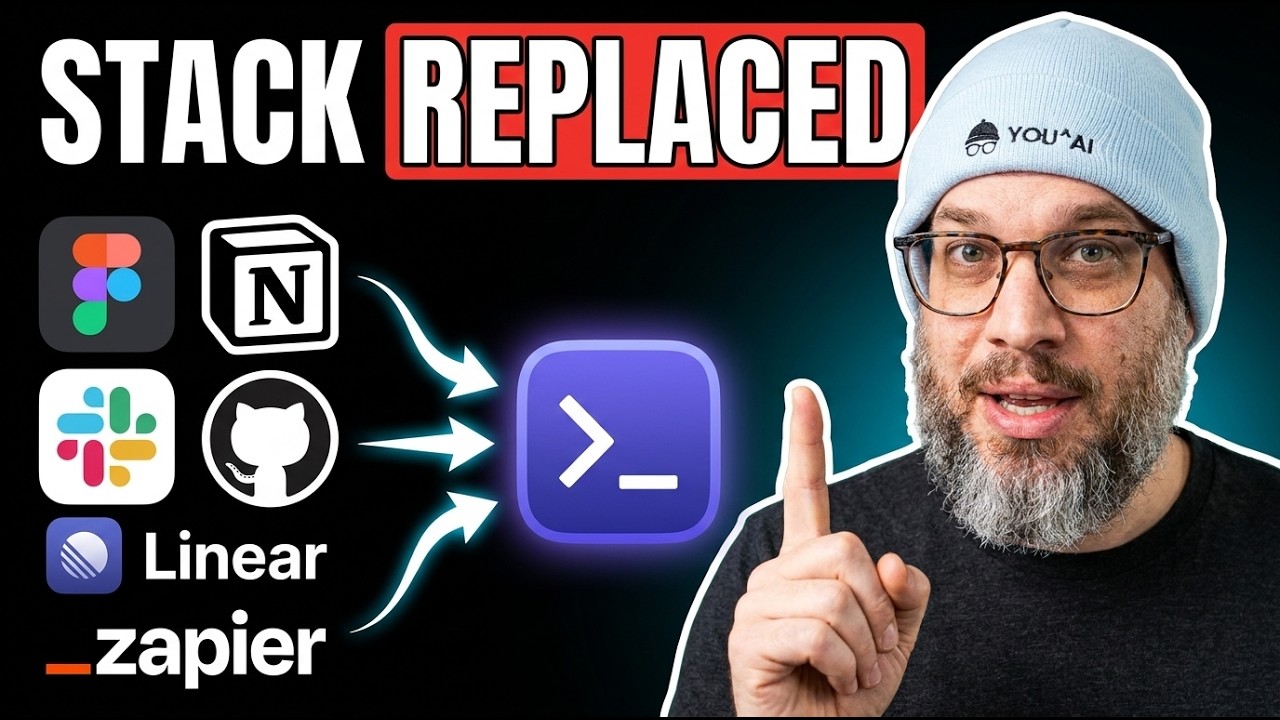
Paul’s Perspective:
This matters because it changes the automation timeline for small and mid-market companies. If agents can reliably use the software you already run through the screen layer, businesses may be able to automate work sooner, reduce manual task load, and rethink process design without waiting for every vendor to modernize its platform.
Key Points in Video:
- Side-by-side testing cited here found Codex completing some computer-use tasks in about 2 minutes versus roughly 5 to 6 minutes for Claude, with fewer fumbles and retries.
- The video points to GPT 5.4 benchmark performance above human baseline on GUI control, suggesting a meaningful jump in reliability for screen-driven workflows.
- OpenAI’s advantage appears tied to OS-level execution and parallel background agents, which can make automation more usable without interrupting employee work.
- The analysis highlights different strategic bets: OpenAI is using existing software interfaces, while Anthropic appears more dependent on ecosystem cooperation and event-driven environments.
Strategic Actions:
- Recognize that Codex is being positioned as a computer-use agent, not just a coding tool.
- Compare real-world task execution speed and reliability across agent platforms before committing to one.
- Evaluate whether your highest-friction workflows can be automated through existing app interfaces.
- Watch for gains from OS-level control and parallel background execution, since they directly affect usability.
- Assess how much your automation roadmap depends on vendor-built agent integrations versus screen-level control.
- Monitor signals such as benchmark progress, training quality, and protocol adoption to guide timing and investment.
The Bottom Line:
- OpenAI’s Codex appears to have moved beyond a coding assistant into a background computer-use agent that can operate everyday Mac apps faster and with fewer retries than competing approaches.
- For business leaders, the bigger implication is that practical automation may no longer depend on vendors building special agent-ready software interfaces first.
Dive deeper > Source Video:
Ready to Explore More?
If you want to sort out where agent-based automation could actually help your business, our team can help you evaluate the workflows, tools, and risks in practical terms. We work together to turn fast-moving AI changes into grounded next steps for your operations.