
Paul’s Perspective:
AI agents are quickly becoming a new “integration layer” for how work gets requested and executed, because they meet teams where they already communicate (chat). The strategic upside is speed and reach, but the business risk is that extensions, prompts, and exposed deployments create a supply-chain attack surface that can move faster than most IT controls unless you standardize governance, review, and runtime guardrails early.
Key Points in Video:
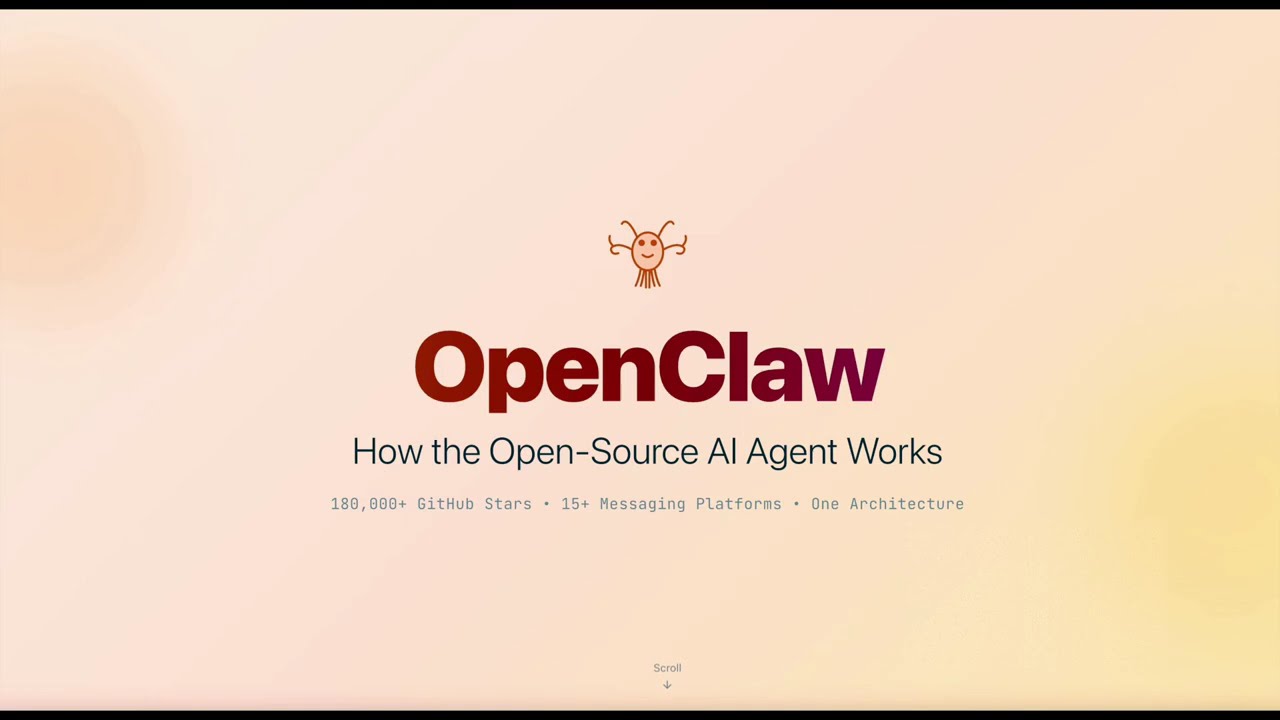
- Scale and adoption: 180,000+ GitHub stars (Feb 2026), including ~100K stars in ~2 days, signaling unusually fast developer uptake.
- Distribution footprint: supports routing across 15+ messaging platforms (e.g., WhatsApp/Slack-style channels) via a gateway WebSocket control plane with schema validation.
- Ecosystem size: 5,700+ community-contributed skills/extensions available through the ClawHub marketplace.
- Security exposure: researchers found 30,000+ exposed instances; scanning identified 36.8% of skills with security flaws (3,984 scanned).
- Threat trend: malicious skills rose from 341 to 1,184; 91% combined prompt injection with traditional malware techniques.
Strategic Actions:
- Use a gateway control plane to route messages and enforce schema validation before requests hit the agent.
- Run agents in a model-agnostic runtime loop with structured state (e.g., JSONL) to improve traceability and portability.
- Enable multi-channel deployment so one agent can serve users across 15+ messaging platforms.
- Extend capabilities through a skills marketplace, but treat skills as third-party code with strict review and controls.
- Adopt interactive UI patterns (agent-driven HTML/Canvas/A2UI-style interfaces) when tasks require structured input and approvals.
- Harden security against the “lethal trifecta” by combining prompt-injection defenses with traditional malware and dependency scanning.
- Continuously monitor for exposed instances and high-risk skills, and implement governance for publishing, updating, and revoking skills.
The Bottom Line:
- OpenClaw shows how modern AI agents can run across the messaging apps your teams already use, using a gateway control plane, a model-agnostic runtime, and a large skills ecosystem to extend capabilities quickly.
- It also surfaces the operational reality: rapid adoption at scale amplifies security risk, so governance, validation, and supply-chain controls have to be designed in from day one.
Dive deeper > Source Video:
Ready to Explore More?
If you’re evaluating AI agents across chat channels, we can help you design the architecture and rollout plan while our team builds the security and governance controls that keep automation safe at scale.