
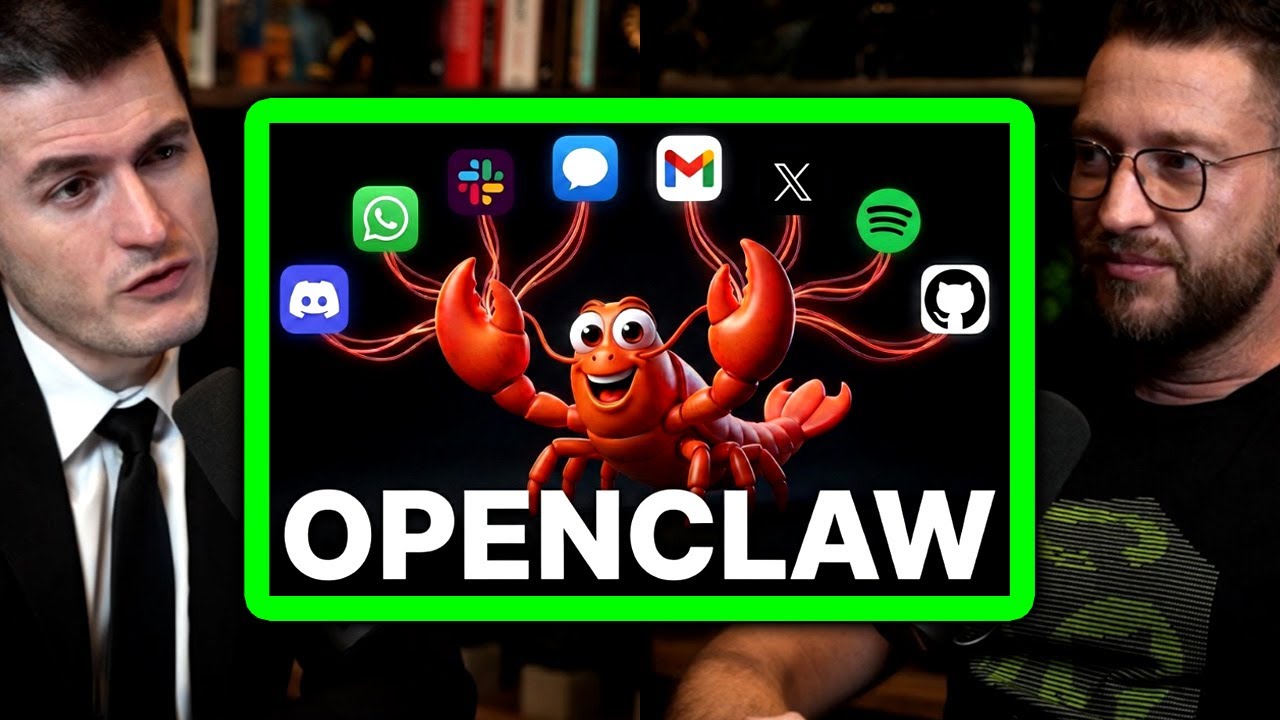
Paul’s Perspective:
Most companies don’t need “more AI,” they need dependable execution across messy, multi-step business processes. Agent frameworks like this matter because they turn prompts into repeatable workflows you can instrument, govern, and continuously improve, which is where real operational leverage and cost savings come from.
Key Points in Video:
- Created by Peter Steinberger; positioned as the fastest-growing project in GitHub history, signaling unusually rapid developer adoption.
- Highlights an “agent framework” approach: define goals, connect tools/APIs, run multi-step workflows, and manage execution across steps.
- Emphasizes open-source advantages for risk management: inspectable code, fewer black boxes, and flexibility to host and govern internally.
- Useful lens for evaluating vendor AI agents vs. building: where custom workflows, data constraints, and compliance push you toward a framework.
Strategic Actions:
- Identify a bounded business workflow that benefits from automation (clear start/end, measurable outcome).
- Break the workflow into discrete steps the agent can plan and execute.
- Connect the agent to the required tools (APIs, databases, internal systems) with least-privilege access.
- Define guardrails: allowed actions, data boundaries, and approval checkpoints for high-risk steps.
- Run in a sandbox and capture logs/traces to see where plans fail or hallucinations appear.
- Add reliability layers: retries, validation, structured outputs, and deterministic checks.
- Deploy with monitoring and human-in-the-loop escalation for exceptions.
- Iterate: measure cycle-time and error-rate improvements, then expand to adjacent workflows.
The Bottom Line:
- OpenClaw shows how AI agents can be composed, tooled, and orchestrated to reliably execute real tasks, not just generate text.
- For business teams, it’s a practical view into how open-source agent frameworks can speed up automation while keeping transparency and control over the stack.
Dive deeper > Source Video:
Ready to Explore More?
If you’re evaluating AI agents for real operations, we can help you pick the right use cases and design a framework-first approach that plugs into your systems safely. Our team can map the workflow, build the automation, and put the governance in place so it performs reliably.