
Paul’s Perspective:
This is an operational inflection point: when AI can sustain work over days and coordinate in groups, it stops being a productivity tool and starts acting like variable-capacity labor. Leaders who move first will redesign throughput (and cost structure) around agent-managed workflows, while laggards will keep paying human rates for work that’s increasingly automatable.
Key Points in Video:
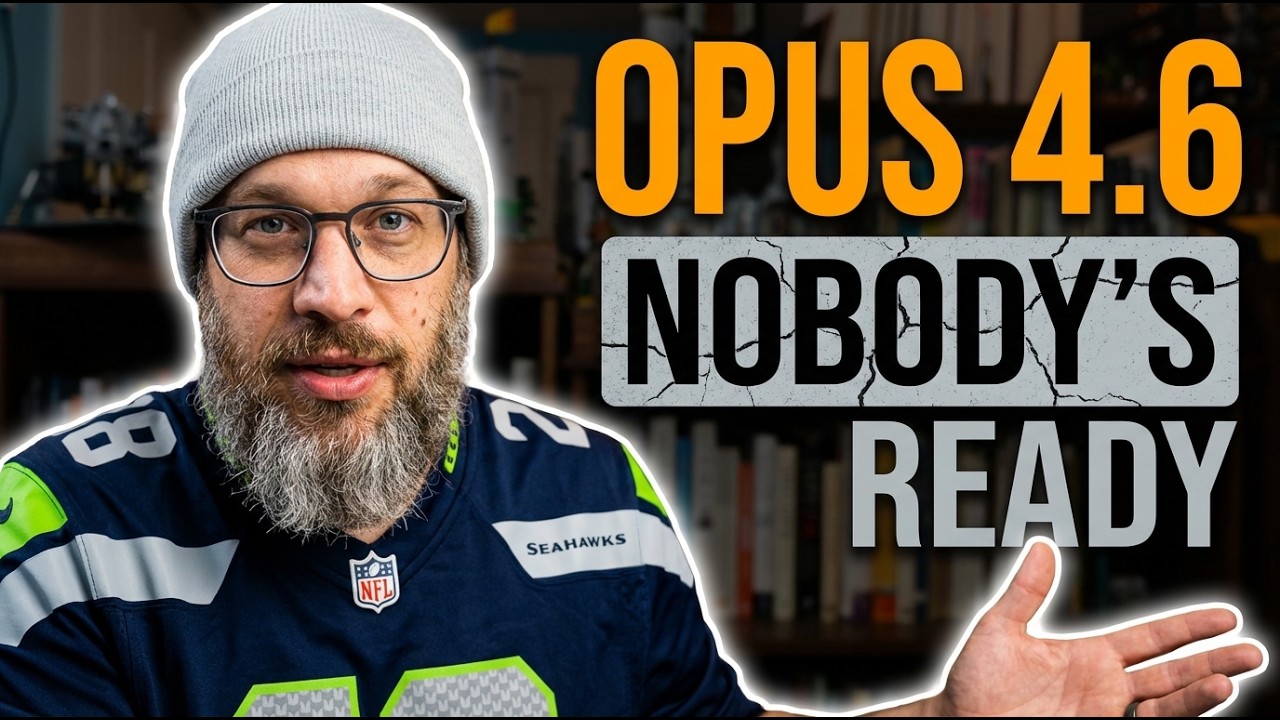
- Autonomous execution time is moving from ~30 minutes to ~2 weeks, enabling multi-day project delivery rather than single-task assists.
- A 5× context window matters, but high “needle-in-haystack” retrieval performance (reported at 76%) is the bigger unlock for long-running work.
- Enterprise examples show AI coordinating work at scale, including managing workflows across ~50 engineers and closing issues autonomously.
- Agents can now surface substantial security findings without step-by-step instruction, including reports of ~500 zero-day vulnerabilities discovered autonomously.
Strategic Actions:
- Reframe AI from “tooling” to “capacity” by defining where sustained, multi-day autonomous work can replace or compress project timelines.
- Evaluate agent effectiveness beyond context size by testing long-horizon retrieval and task persistence on your real documentation and systems.
- Pilot hierarchical agent teams (planner + doers + reviewer) to mirror how work is coordinated across a human team.
- Redesign roles around an agent-to-human ratio, clarifying what humans must do exceptionally well (problem framing, validation, risk management, stakeholder alignment).
- Introduce governance for accountability: logging, approvals, permissions, and rollback plans for autonomous changes.
- Apply agents to high-leverage backlogs (issue triage, test generation, refactors, documentation, security scanning) and measure cycle-time and defect rates.
The Bottom Line:
- AI agents are shifting from short, brittle automations to sustained work that can run for days and coordinate across tasks like real teams.
- That changes the leadership question from whether to adopt AI to how to redesign roles, workflows, and accountability around an agent-to-human operating model.
Dive deeper > Source Video:
Ready to Explore More?
If you want to translate these agent capabilities into a practical operating model, we can work with your team to pilot a few high-ROI workflows and put the right guardrails around them. Our approach is collaborative and focused on measurable throughput gains, not AI theater.