
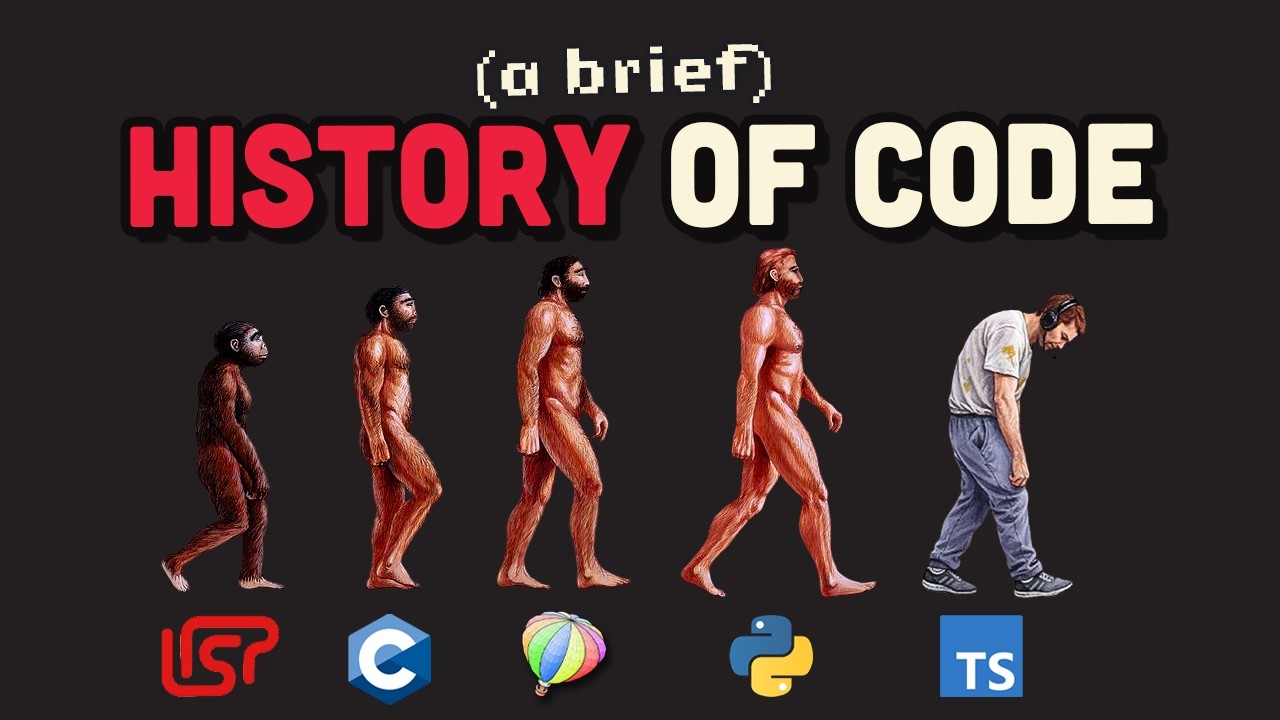
Paul’s Perspective:
Grasping the evolution of programming helps business leaders better understand the roots of digital transformation and how each breakthrough has paved the way for today’s agile, accessible technologies. For businesses seeking to stay competitive, this perspective enables smarter technology decisions and a more informed digital strategy.
Key Points in Video:
- Traces programming milestones from Alan Turing’s foundational concepts in the 1930s to the invention of languages like C, Java, and Python.
- Key figures such as Kathleen Booth, Edsger Dijkstra, Dennis Ritchie, and Bjarne Stroustrup played critical roles in driving language evolution and efficiency.
- Shifts from hardware-specific programming to human-readable high-level languages empowered millions to participate in software development.
- Modern languages like JavaScript emerged to address new challenges of web development, cementing programming’s central role in technology and business.
Strategic Actions:
- Recognize the foundational contributions of early computing pioneers such as Alan Turing and Kathleen Booth.
- Observe how languages evolved from assembly to high-level languages for increased accessibility and productivity.
- Identify key milestones, including the creation of C, C++, Java, Python, and JavaScript.
- Connect historical advancements to the current software landscape and modern development practices.
- Leverage lessons from programming history to inform strategic technology investments.
The Bottom Line:
- Discover how programming’s journey from the Turing machine to present-day languages has shaped the technology we rely on today.
- Understanding this history reveals the breakthroughs that continue to drive innovation in software development.
Dive deeper > Source Video:
Ready to Explore More?
We team up with business leaders to help translate technology’s rapid pace into practical solutions for their teams. Our collaborative approach makes it easier to put the lessons of programming history into action for your organization’s growth.